
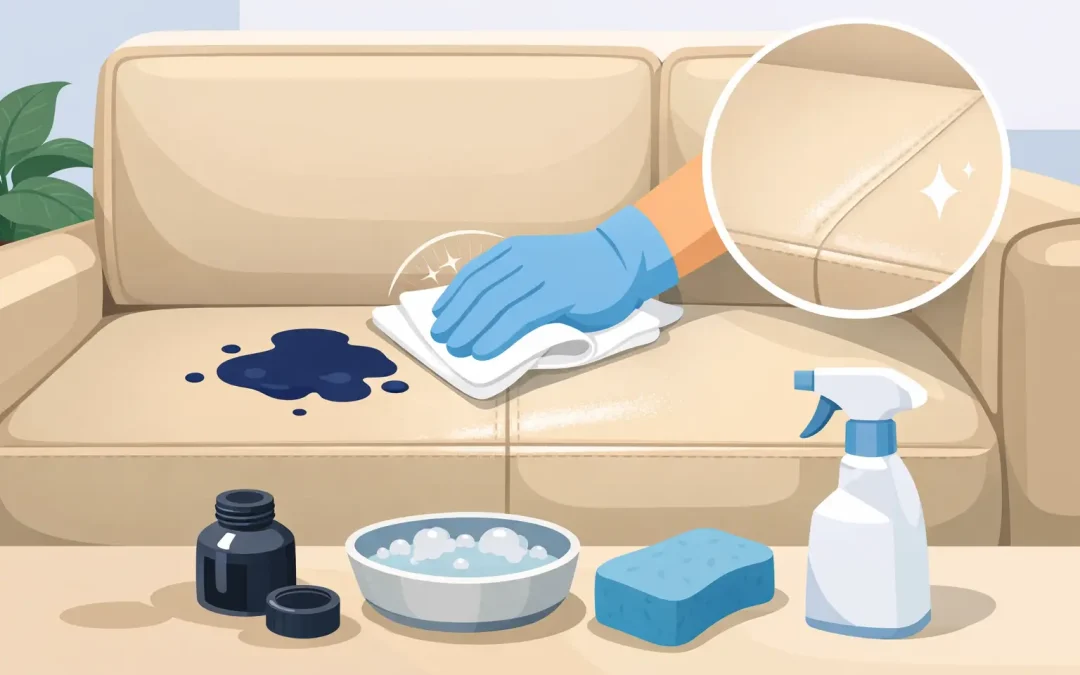
A pen mark on a leather lounge can go from a small accident to a stubborn stain surprisingly quickly. Trying to remove ink from leather lounge upholstery with the wrong product can also leave a larger problem behind: faded colour, a dull patch, stripped finish or stiffened leather. The safest approach is to act promptly, use as little moisture as possible and understand what type of leather you are dealing with.
Most modern lounges have protected or pigmented leather with a clear surface coating. This offers some resistance to spills, but ink can still work into tiny cracks and wear points. Unprotected aniline leather, suede and nubuck are more absorbent and need a much more cautious approach. If the lounge is expensive, pale in colour or already worn, professional treatment is usually the lower-risk option.
What to do first after an ink spill
Start by keeping the affected area dry and still. Do not rub the mark with a cloth, as friction pushes the ink deeper into the grain and spreads it across a wider area. Avoid sitting on the cushion until you have dealt with the mark, particularly if it is fresh.
Use a clean, white microfibre cloth or plain white paper towel to gently blot loose ink from the surface. Press and lift rather than wiping. A coloured towel can transfer dye onto damp leather, while printed paper towel may leave its own residue.
Before using any cleaner, take a quick look at the lounge. A shiny, consistent surface is often protected leather. Natural-looking leather with visible pores, colour variation and little surface sheen may be aniline. If a tiny drop of water darkens the leather almost immediately, treat it as absorbent and do not experiment with liquid cleaners.
How to remove ink from a leather lounge without causing damage
For a fresh, light ink mark on protected leather, begin with a purpose-made leather cleaner. Apply a small amount to a white cloth, not directly to the lounge, then work carefully around the outside of the mark before moving inward. Use light, controlled dabs. The goal is to lift the ink gradually without over-wetting the finish.
Check the cloth as you work. If ink is transferring, rotate to a clean section of cloth so you are not putting it back onto the leather. Stop once the mark has faded as far as it safely will. Repeated aggressive cleaning often causes more visible damage than the remaining ink.
Always test any leather product first in a hidden area, such as the rear edge of a cushion or underneath the lounge. Let the test spot dry fully, then look for colour change, stickiness, loss of shine or a rough feel. Leather can react differently depending on its age, coating, dye and previous conditioning products.
Once the area is dry, a suitable leather protectant or conditioner may help restore a more even feel. This step depends on the leather type and cleaner used. Some protected leathers need a protective cream rather than a heavy conditioner, while absorbent leather needs products designed specifically for aniline finishes.
Why household remedies are risky
Online advice often suggests rubbing alcohol, nail polish remover, hairspray, hand sanitiser, vinegar, toothpaste or even milk. These are not reliable leather-cleaning methods. Solvents may dissolve or soften the protective coating, remove dye and create a pale ring around the original stain. Oils can darken the leather, attract grime and make later professional restoration more difficult.
A magic eraser is another common mistake. It works through abrasion, which can take the surface coating off leather. It may appear to remove the ink at first, but can leave an obvious flat or lighter patch once the area dries.
Warm water and dishwashing liquid are also not a safe default. Water can move dye, leave tidemarks and soak into stitching or cushion foam. Dishwashing liquid can remove protective oils and leave a residue that changes how the leather feels.
When a professional leather clean is the better call
Ink removal is not always a simple surface-cleaning job. A professional cleaner will assess the leather finish, dye stability, condition and extent of ink transfer before selecting a material-specific product and technique. This matters most where the mark is old, dark, extensive or has already been treated with household products.
Call for help sooner rather than later if the ink is on an aniline, nubuck or suede lounge; the lounge is white, cream or a light pastel; ink has transferred from newspaper, denim or a handbag; or there are multiple pen marks from children or office use. These situations can need controlled ink removal, colour correction or protective treatment rather than more rubbing.
The same applies to commercial seating, reception lounges and marine upholstery. These surfaces often see regular use and may need the affected panel cleaned evenly so the repaired area does not stand out from the rest of the furniture. For Northern Beaches homes, businesses and vessels, Pro Wet & Dry uses leather-appropriate cleaning methods aimed at improving the stain without compromising the finish around it.
Common mistakes that make ink stains worse
The biggest mistake is panic cleaning. Ink looks urgent, so it is tempting to grab whatever is under the sink. Unfortunately, a strong solvent can change leather colour in seconds, especially around worn seams and high-contact areas such as armrests.
Using too much product is another problem. Leather cleaning should be controlled, not saturated. Excess liquid can spread the ink, leave a water mark or soak into the backing material. If a cleaner leaves the surface very wet, stop and blot gently with a dry white cloth.
Do not use coloured cloths, rough sponges, scrubbing brushes or paper with printed designs. Avoid heat from a hair dryer as well. Fast, direct heat can dry out leather and make an affected patch look harder or more wrinkled than the surrounding area.
Finally, do not keep treating the same spot for half an hour. If the stain is not shifting after a careful attempt with a suitable leather cleaner, the ink may have penetrated below the coating. At that stage, continued DIY work can remove colour before it removes the ink.
Preventing more pen marks on leather upholstery
A few practical habits reduce the chance of repeat stains. Keep pens and markers away from lounge arms and cushions, especially where children do homework or adults work from the sofa. Check pockets before settling in, as leaking pens often go unnoticed until someone stands up.
A regular leather care routine also helps. Properly cleaned and protected leather is easier to wipe down and less likely to hold surface grime around stitching, creases and contact points. It will not make the lounge ink-proof, but it can give you more time to respond before a fresh mark becomes embedded.
If your lounge is in a holiday rental, office, waiting room or boat cabin, inspect high-use seating regularly. Catching pen marks, sunscreen transfer, food spills and body oils early keeps the upholstery presentable and reduces the chance of costly restoration later.
A small ink mark does not always mean a ruined lounge. Treat it gently, avoid improvised solvents and stop before cleaning turns a stain into surface damage. A careful assessment and the right leather-specific method give valuable furniture the best chance of looking like new again.