
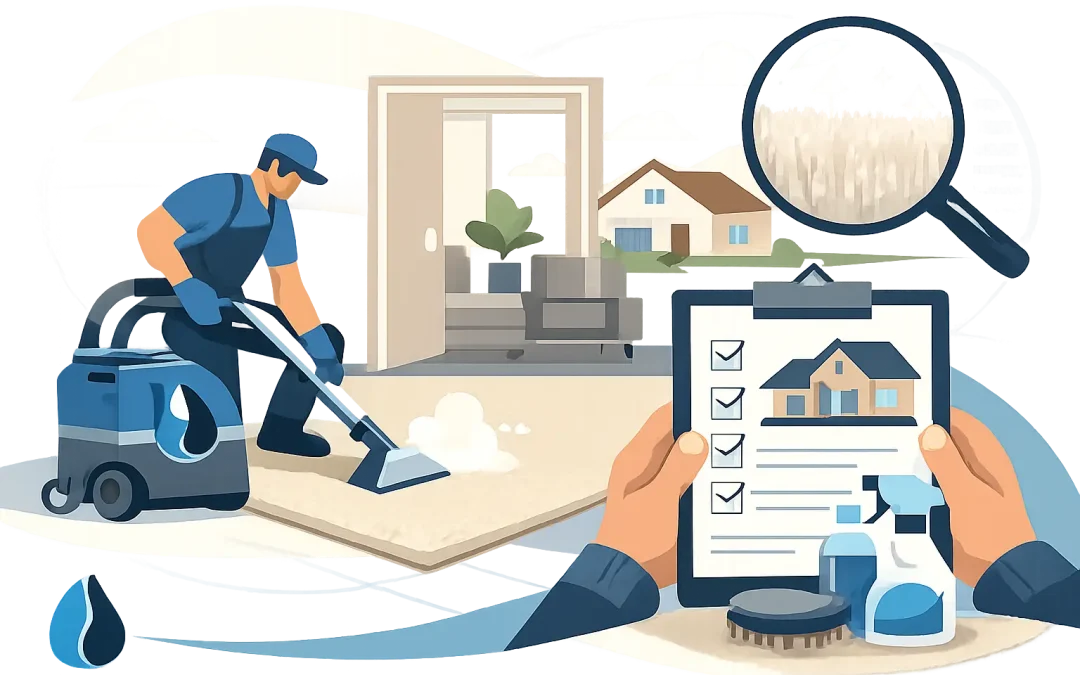
A carpet can look acceptable when the furniture is in place, then tell a very different story once a room is cleared for an inspection. Traffic lanes, old drink spills, pet marks and lingering odours become far more obvious in an empty space. To prepare carpets before property inspection, focus on the issues an agent, landlord, buyer or property manager will notice first: overall presentation, stains, smell and whether the carpet is genuinely dry and usable.
Whether you are finishing a tenancy, listing a home for sale or handing back a commercial premises, carpet cleaning should be planned as part of the final presentation, not squeezed in the night before. A rushed clean can leave damp patches, residue or stains that reappear as the carpet dries.
Prepare Carpets Before Property Inspection: Start Early
Give yourself enough time to assess the carpet properly. Ideally, inspect each room one to two weeks before the scheduled property inspection, particularly if there are pets, young children, heavy foot traffic or known stain issues. Open blinds and look at the carpet in natural daylight. Marks that disappear under artificial lighting can stand out sharply in a bright room.
Walk slowly through entrances, hallways, around lounges, beside beds and under dining tables. These are the areas where embedded soil builds up. Look for flattened pile, dark tracks, pale spots from cleaning products, sticky residue and loose fibres. Then get close enough to check for odours. A room can look clean while still holding pet urine, dampness or food smells in the carpet backing and underlay.
For tenants, compare the carpet with your entry condition report and photos where available. Normal wear is different from damage, but visible stains, odours and heavily soiled traffic areas can still raise questions at the final inspection. For vendors, the standard is presentation. Buyers often use scent and cleanliness to form an opinion about how well a property has been maintained.
Clear the Room Before Cleaning
Carpet cleaning works best when the cleaner can reach as much carpet as possible. Remove small furniture, floor lamps, pet beds, toys, mats and stored items before the appointment. Vacuuming around furniture may make a room look tidier, but it does not deal with dust and grit trapped in the exposed walkways.
Large items can often remain in place, depending on the cleaning method and access. However, moving lightweight furniture out of the way makes a noticeable difference to the finished result. It also prevents the common inspection problem of clean rectangles around furniture surrounded by dull, heavily used carpet.
Vacuum thoroughly before any wet cleaning. Take your time along skirting boards, in corners and on stairs, where dry soil collects. Vacuuming removes loose grit that can otherwise turn into muddy residue once moisture is introduced. If the carpet has a thick pile or has not been vacuumed for some time, make two slow passes in different directions.
Treat Stains According to the Fibre and the Spill
Not every stain should be treated the same way. Wool, nylon, polypropylene and blended carpets respond differently to heat, water and cleaning solutions. The wrong spot cleaner can set a stain, strip colour or leave a soapy patch that attracts more dirt after the inspection.
Start by identifying what caused the mark, if possible. Tea, coffee, wine, makeup, grease, ink, pet accidents and rust all need different treatment. Fresh spills are easier to address than old ones, but do not scrub aggressively. Scrubbing pushes contamination deeper into the pile, roughens fibres and can enlarge the affected area.
Blot fresh liquid with a clean white cloth, working from the outside of the spill towards the centre. Avoid coloured towels, as dye can transfer to damp carpet. Do not soak the area, and avoid mixing supermarket products or using strong bleach-based cleaners. A stain may look lighter initially but return with a yellow edge or brown wick mark as the carpet dries.
Pet spots deserve extra attention before an inspection. Surface cleaning may remove the visible mark but not the urine salts and bacteria below the pile. If there is a persistent smell, especially when the room is closed up, the treatment may need to reach the backing and underlay. Deodorising fragrance alone will not solve the source of the odour.
Choose the Right Level of Professional Cleaning
A hired machine or DIY spot treatment can help with light maintenance, but an inspection is usually not the time to experiment on a valuable carpet. Rental carpets, wool carpets, heavily soiled family rooms and carpets with pet odours often need a professional clean using material-specific methods.
Professional hot water extraction, commonly called steam cleaning, can remove embedded soil, allergens and residues that vacuuming cannot reach. The key is not simply putting water into the carpet. Effective cleaning relies on the correct solution, controlled water use, agitation where needed and strong extraction to recover soil and moisture.
Fast drying matters. Over-wetting can lead to stale smells, wick-back stains and inconvenience when an inspection is due. Industrial extraction equipment and the right drying approach leave the carpet clean without keeping the room out of action for longer than necessary. Drying time still depends on carpet type, humidity, airflow and how heavily the carpet was soiled.
For a final tenancy inspection, check whether your lease or managing agent requires a carpet cleaning receipt. Requirements vary, so read the agreement rather than assuming a receipt is always needed. If professional cleaning is required, book early and retain the invoice with your other handover documents.
Schedule Cleaning Around Your Inspection Date
The best timing depends on the condition of the carpet and the access you have to the property. In most cases, professional cleaning one to three days before inspection gives the carpet time to dry fully while keeping it fresh for the appointment. Avoid cleaning immediately before the agent arrives, especially during wet or humid weather.
After cleaning, increase airflow by opening windows where safe and using ceiling fans or air conditioning. Keep pets, children and heavy furniture off damp carpet. If furniture must be returned before the carpet is completely dry, use protective tabs or blocks beneath legs to reduce the risk of marks, rust transfer or timber stain bleeding into the fibres.
Do a final walk-through once the carpet is dry. Check the room from the doorway and then from a low angle near the floor. This makes traffic lanes, missed spots and furniture dents easier to see. If an old stain has reappeared, raise it promptly rather than hoping it will be overlooked.
Do Not Forget the Edges, Stairs and Odours
Inspections are rarely limited to the middle of the room. Skirting edges, wardrobe floors, stair treads, hallway transitions and carpet near external doors can show the most wear. These areas are also where dust, sand and moisture are carried in from outside.
Stairs need particular care because each tread receives concentrated foot traffic. A clean lounge room paired with visibly dark stair edges can make the whole property feel less maintained. Likewise, musty odours around wardrobes or closed rooms may point to poor ventilation, a previous leak or a pet accident rather than ordinary carpet soil.
If there has been flooding, an overflowing washing machine, a leaking air conditioner or another water event, do not rely on surface drying. Moisture can remain beneath the carpet and create odour or mould concerns. Rapid extraction and proper drying are more useful than adding perfume or running a household fan for a few hours.
Present the Carpet Well on Inspection Day
Once the carpet is clean and dry, keep the space simple. Remove shoes at the door, keep pets away from cleaned rooms and avoid eating or drinking on the carpet. Vacuum lightly only if needed, using a clean vacuum head, as excessive vacuuming straight after cleaning can disturb freshly groomed pile.
Open curtains and allow the room to look bright, but do not hide a problem with rugs or furniture if the inspection is for a vacant property. Clean, dry carpet with even pile direction gives a far better impression than a room that appears to be covering something up.
For difficult stains, pet odours, heavily used rentals or a tight handover deadline, a specialist cleaner can save time and avoid costly guesswork. Pro Wet & Dry uses professional extraction equipment and material-appropriate treatments to help Northern Beaches properties look clean, smell fresh and dry quickly before inspection.
A property inspection is easier when the carpet is one less thing to worry about. Assess it early, treat the real cause of stains or odours, allow proper drying time and leave the room ready to be viewed as it is meant to be.