Tips & guides
How to Remove Pet Urine Smell From Carpet
Learn how to remove pet urine smell from carpet with safe steps that treat the source, protect carpet fibres and stop lingering odours returning indoors.
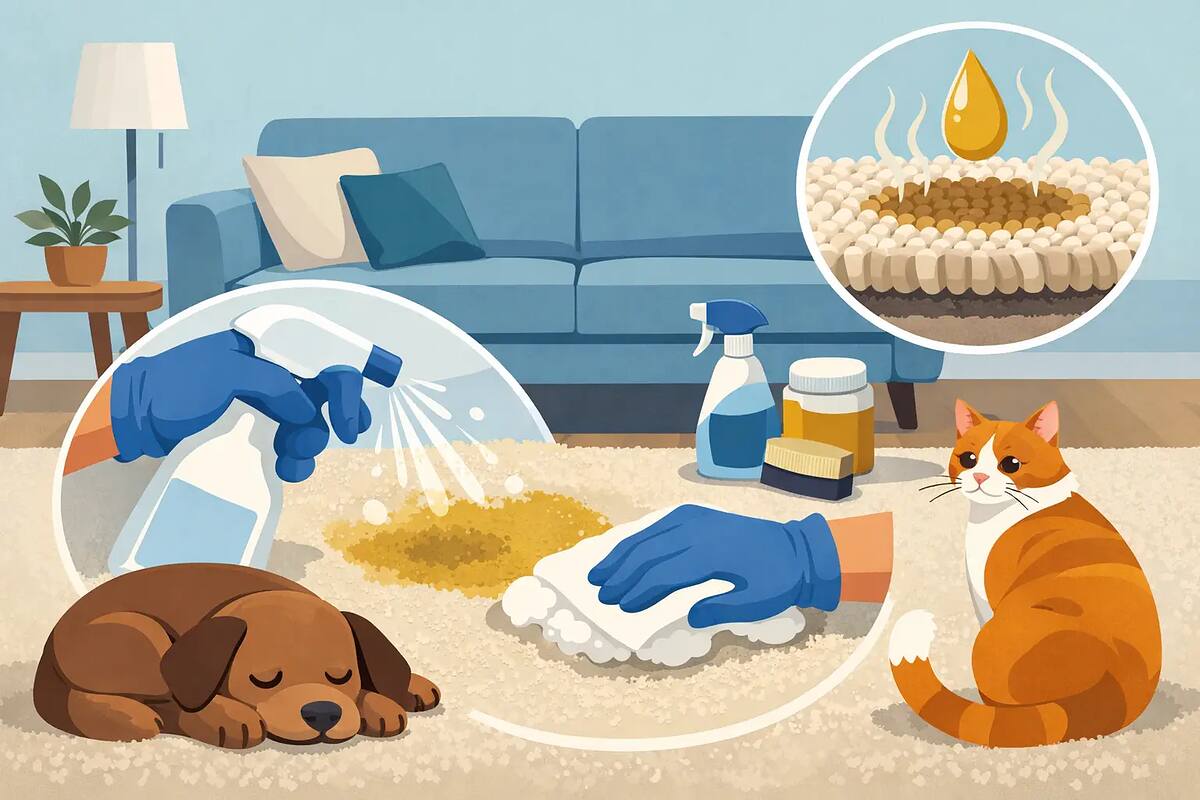
A carpet can look perfectly clean and still smell strongly of urine when the room warms up or the weather turns humid. Knowing how to remove pet urine smell from carpet means treating more than the visible spot. Urine can soak through carpet fibres, into the backing and sometimes the underlay beneath, where ordinary deodorising sprays cannot reach.
The good news is that fresh accidents are usually manageable at home when they are treated promptly and correctly. Older, repeated or widespread odours need a more thorough approach. The aim is not to cover the smell with fragrance. It is to remove the urine residue that keeps producing odour and may encourage pets to return to the same area.
Why pet urine odour keeps coming back
Pet urine contains uric acid crystals, salts and organic matter. After the moisture has dried, those crystals can remain in the carpet even if the stain seems to have disappeared. When humidity or moisture returns, the residue can reactivate and release the familiar ammonia-like smell again.
This is why a quick spray of perfume, disinfectant or supermarket carpet freshener often gives only short-term relief. It may make the room smell better for a day, but it does not break down the source of the odour. Harsh products can also affect carpet colour, leave sticky residue behind or make the area harder to clean properly later.
The level of treatment depends on the accident. A small fresh patch on synthetic carpet is very different from an old dog urine mark that has soaked into wool carpet, underlay and a timber subfloor. Repeated marking near a doorway, lounge or bedroom corner can require treatment across a wider area than the visible stain.
How to remove pet urine smell from carpet at home
For a fresh accident, act quickly. The less time urine has to travel down through the carpet, the better the chance of stopping a lasting smell.
Blot first, do not scrub
Place clean white towels or absorbent paper over the wet area and press firmly. Stand on the towels if needed, then replace them and repeat until they come away mostly dry. Work from the outside of the patch towards the centre so you do not spread it further.
Avoid rubbing the carpet. Scrubbing pushes urine deeper into the pile and can roughen or distort the fibres. It also makes a stain more likely to spread beyond the original spot.
Use an enzyme-based pet urine cleaner
Apply a quality enzyme cleaner made specifically for pet urine, following the label directions carefully. These products are designed to break down the organic residue rather than simply mask the smell. The cleaner needs enough contact time to work, so do not spray it on and immediately dry it off.
For the treatment to be effective, it generally needs to reach as deep as the urine did. That does not mean flooding the carpet. Over-wetting can cause its own problems, particularly where underlay, timber flooring or marine-grade flooring is involved. Apply enough product to treat the affected layer, then allow the stated dwell time before blotting excess moisture.
If the product recommends air drying, let the area dry naturally with good ventilation. Keep pets away until it is dry. A fan can help, but avoid using intense heat unless the product instructions say it is suitable.
Rinse lightly and dry the carpet thoroughly
Once the enzyme treatment has had time to work, lightly blot or rinse as directed. The key is to avoid leaving a chemical residue that can attract dirt underfoot. Finish by drying the carpet as quickly as possible with open windows, fans or air movement.
Do not judge the result while the carpet is still wet. Some products have their own scent, and damp carpet can hold odour temporarily. Check the area again when it is fully dry, preferably at a different time of day when the room is warmer.
Products and methods to avoid
A few common DIY methods can make a pet odour problem more difficult. Bleach is not suitable for most carpets. It can permanently remove colour, damage fibres and create a safety risk if it comes into contact with other cleaning products.
Ammonia-based cleaners are also a poor choice. Urine already contains ammonia compounds, and the smell may confuse some pets or encourage them to mark the same location again. Strongly perfumed sprays only cover the problem for a short time.
Vinegar and bicarbonate of soda are often suggested for light odours, but they are not a reliable fix for urine that has penetrated carpet backing or underlay. They can also leave powdery residue or affect the finish of delicate materials. If you use any cleaner, test it first in a hidden section of carpet and never mix products together.
Steam cleaning has a place in general carpet maintenance, but it is not always the first answer for untreated urine. Heat can set some stains, and steam alone does not necessarily neutralise the uric acid crystals causing the odour. A targeted urine treatment should come before any professional hot-water extraction where required.
Finding old or hidden urine spots
If the smell is obvious but you cannot see a stain, look for the pattern. Pets often return to edges of rugs, corners, furniture legs, hallway transitions and areas close to external doors. A UV black light can help identify some dried urine deposits in a darkened room, although it can also highlight other residues, so it is a guide rather than a final diagnosis.
Pay attention to where the odour is strongest. Get close to the carpet at floor level and check nearby upholstery, bedding, curtains and skirting boards as well. In apartments, rental properties and homes with several pets, there may be more than one affected area.
Old spots usually need more than a surface spray. If the urine has reached the underlay, treating only the top pile can leave the source below untouched. That is when the smell disappears briefly, then returns after rain, a humid day or a thorough clean.
When professional pet odour treatment is the better option
Call a specialist cleaner when odour returns after DIY treatment, the accident is old or repeated, or the carpet still smells after drying. Professional assessment is also worthwhile for wool, silk-blend, natural-fibre or expensive carpets, where the wrong product can cause colour loss, browning or fibre damage.
A proper treatment starts by locating the affected area and assessing how far the contamination has travelled. Depending on the carpet construction and the severity of the issue, the process may include material-safe urine treatment, controlled flushing, specialised extraction and industrial-grade recovery. The goal is to remove contaminated moisture and residue, not soak the carpet and hope for the best.
Fast drying matters. Excess moisture left behind can create musty smells and inconvenience in busy family homes, rentals, offices or commercial spaces. Professional equipment extracts far more moisture than towels or a domestic carpet cleaner, helping get the area back into use sooner.
For severe, long-term contamination, the honest answer is that carpet treatment may not be enough on its own. Underlay can sometimes need replacement, and absorbent subfloors may require separate sealing or treatment. A reliable cleaner should explain that clearly rather than promising a quick fix that only masks the issue.
Pro Wet & Dry provides targeted pet odour treatment across Sydney's Northern Beaches, including Mona Vale, Dee Why, Avalon, Newport, Narrabeen and Brookvale. The approach is based on the carpet material and the depth of the problem, with specialised equipment used to treat ingrained odours while protecting the surface and supporting fast drying times.
Preventing your pet from using the same spot again
Cleaning the urine completely is one part of prevention. Pets may revisit an area because they can still detect scent that people cannot, but they can also be responding to routine changes, anxiety, territory issues or an underlying health concern.
Once the carpet is dry and odour-free, block access to the spot for a while or place a pet bed, food bowl or piece of furniture there if appropriate. Keep litter trays clean, maintain regular toilet breaks and reward pets when they use the correct area. If accidents begin suddenly or become frequent, a vet check is sensible.
For households with young pets, older animals or more than one dog or cat, prompt spot treatment and periodic professional carpet cleaning can protect both the carpet and the indoor air quality. A clean, dry carpet without lingering scent gives your pet less reason to return to the same place - and lets the room feel like home again.
Odour Removal
Need a hand with this?
Pet urine, vomit and lingering smells treated at the source, not masked. Pro Wet & Dry has been cleaning on the Northern Beaches since 2001.
Or call 1300 132 273