
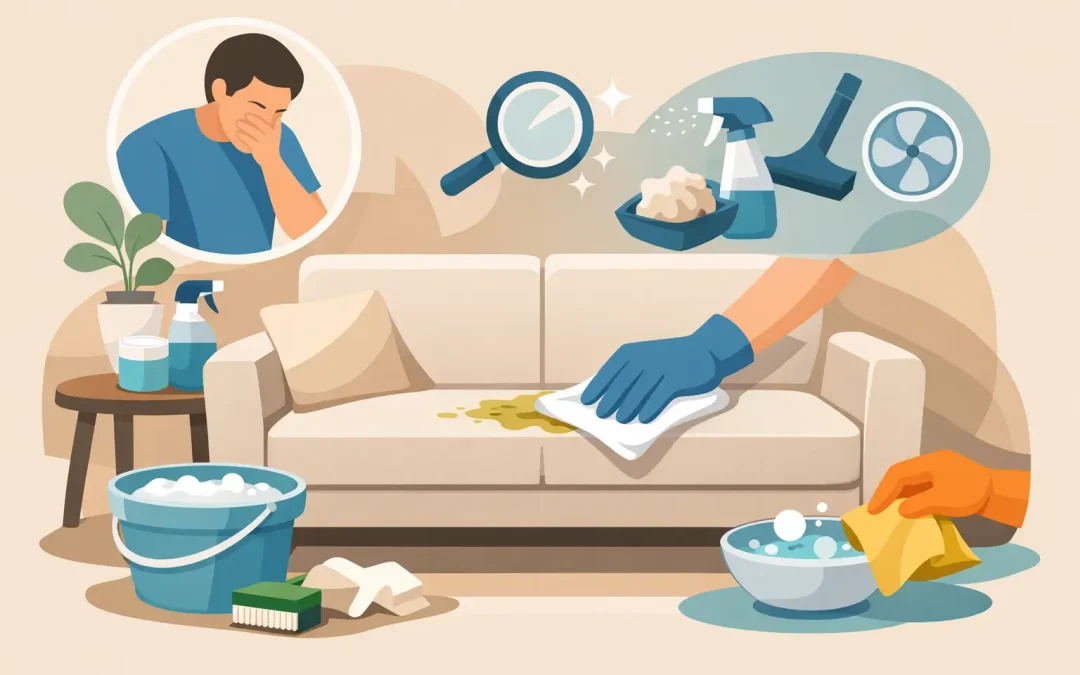
When you need to clean vomit from fabric sofa upholstery, speed matters – but scrubbing hard or soaking the cushion can turn a short-lived mess into a stubborn stain and lingering odour. The aim is to remove the material, treat the affected area safely, and dry the fabric thoroughly without pushing contamination deeper into the foam.
This is one of those jobs where the visible mark is only part of the problem. Vomit contains acids, food particles and bacteria that can settle below the surface, particularly on absorbent lounges, modular sofas and fabric dining chairs. A quick wipe may make the sofa look better, but it will not always deal with what has soaked into the cushion.
Act quickly, but do not rub
Put on disposable gloves before you start. If the mess is fresh, use paper towel, an old cloth or a blunt-edged scraper to lift away solids. Work from the outside towards the middle so you do not spread the affected area across clean fabric.
Avoid rubbing. Rubbing forces particles into the weave and can rough up the upholstery fibres, leaving a faded or fuzzy patch once the fabric dries. Place clean paper towel over the damp area and press gently to absorb moisture. Replace it as it becomes wet.
If you are dealing with a removable cushion, take it off the sofa and check whether any liquid has reached the underside, inner cover or base of the lounge. Treating only the top can leave odour behind in the padding.
Check the sofa’s cleaning code first
Before applying any cleaning product, find the care label. It is commonly under removable cushions, beneath the sofa or in the manufacturer’s paperwork. The code helps determine what the fabric can safely handle.
A W code usually means water-based cleaning is suitable. S indicates solvent-based cleaning only, while WS means either method may be used with care. An X code generally means vacuuming only and requires professional assessment for spills and stains.
These codes are useful, but they are not a guarantee that every cleaner is safe. Fabric blends, dyes, protective coatings and previous cleaning attempts all affect the result. If you are unsure, test a small amount of your chosen product on a hidden section first and allow it to dry completely. Stop if the colour transfers, the fabric changes texture or a water mark appears.
How to clean vomit from fabric sofa upholstery at home
For a water-safe fabric, start with a mild solution of cool water and a very small amount of clear, gentle dishwashing liquid. Do not use hot water. Heat can set protein-based stains and may make the smell harder to remove.
Dampen a clean white cloth with the solution rather than pouring it directly onto the lounge. Blot the area carefully, changing to a clean section of cloth as soil lifts. White cloths are best because coloured towels can transfer dye onto pale upholstery.
Follow with another cloth lightly dampened in plain cool water to remove detergent residue. Too much soap left in the fabric can create a sticky patch that attracts dirt after the sofa is back in use. Keep moisture to a minimum, especially around seams, buttons and the edges of cushions where liquid can travel into filling.
For a light remaining odour, a fabric-safe enzyme treatment can help break down organic residue. Read the label closely and make sure it is suitable for upholstery, not just carpet. Enzyme products need enough contact time to work, but they should not leave the cushion saturated.
Do not mix cleaning chemicals. Bleach, ammonia, disinfectants, vinegar and scented sprays may react with other products, damage upholstery dyes or simply mask the odour without removing its source. A heavily perfumed lounge that still smells unpleasant a day later needs deeper treatment, not more fragrance.
Dry the sofa properly to stop odours returning
Drying is where many DIY attempts fall short. Surface fabric can feel dry while the foam underneath remains damp, creating the conditions for stale odours and, in some cases, mould growth. Open windows if conditions allow, run fans nearby and keep people and pets off the sofa until it is fully dry.
Do not place cushions in direct harsh sunlight for extended periods. Sun can fade fabrics and uneven heat may affect foam. A well-ventilated room with consistent airflow is the safer option.
If the cushion feels heavy, cool or damp several hours after cleaning, avoid putting it back into regular use. Press a dry towel firmly against it. If moisture continues to transfer, the filling has likely absorbed more liquid than a surface clean can remove.
When a home clean is enough – and when it is not
A quick at-home response can be enough for a small, fresh spill on a tightly woven, water-safe fabric where the liquid has not reached the cushion foam. The key is gentle blotting, minimal moisture and complete drying.
Professional upholstery cleaning is the safer choice if the vomit has soaked into cushions, dried before you found it, involved a child or pet, or left an odour after cleaning. It is also worth calling in help for expensive lounges, delicate linen or viscose blends, pale fabrics, feather-filled cushions and sofas marked S or X.
The same applies when the stain keeps reappearing. This usually means residue remains below the visible surface and is being drawn back up as the fabric dries. More spot cleaner on top rarely fixes that problem.
A specialist clean uses material-specific products, controlled moisture and extraction equipment to flush out contamination while recovering it from the fabric and filling. This is different from simply spraying a deodoriser or hiring a machine that may overwet the lounge. Done properly, the result is a cleaner, fresher sofa with faster drying times and less risk of creating water marks.
Avoid these common mistakes
The temptation after an unpleasant spill is to throw every cleaning product at it. That approach can make restoration harder. Avoid these four mistakes:
- Scrubbing aggressively, which spreads the mess and damages fibres.
- Using hot water or steam before the material has been removed.
- Soaking the upholstery with water, spray or foam cleaner.
- Covering the area with perfume, disinfectant or fabric freshener before the source of the odour is gone.
Bicarbonate of soda is often suggested for smells, and it can absorb some surface odour when used carefully on a dry fabric. However, it does not remove contamination from deep inside a cushion. Fine powder can also be difficult to vacuum out of textured upholstery, buttons and seams. It is not a substitute for extraction where liquid has penetrated the filling.
Protect the lounge after treatment
Once the sofa is clean and completely dry, vacuum it using an upholstery attachment to lift crumbs, hair and dry debris from creases. Regular vacuuming helps prevent ordinary soil from bonding with fabric, which makes later stains more noticeable.
If vomiting is likely to be an ongoing issue due to young children, pets or illness, keep clean white towels, gloves and a suitable upholstery-safe cleaner handy. A washable throw can also provide a practical first layer of protection on the seating area most often used, provided it is removed and washed promptly after an accident.
For Northern Beaches homes, rental properties, offices and marine interiors, Pro Wet & Dry can assess the fabric and use the right cleaning method for the material rather than taking a one-product-fits-all approach. That matters when a stain has reached deep into the upholstery or the smell is still hanging around after a DIY clean.
A sofa does not need to be written off because of one unpleasant accident. Deal with it promptly, keep the fabric from becoming saturated, and get professional help before a hidden odour turns a clean-looking lounge into one nobody wants to sit on.