
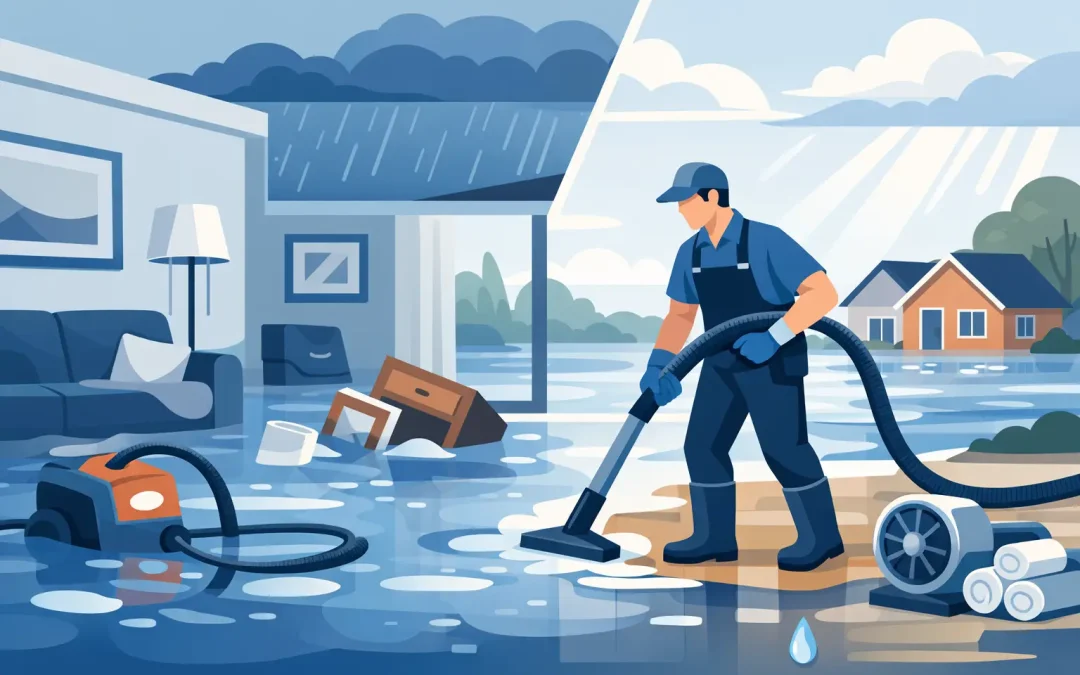
A burst flexi hose, overflowing washing machine or storm-driven leak can soak a room far faster than most people expect. Effective water extraction is not simply about removing what is visible on the carpet. It is about getting moisture out of the carpet backing, underlay, furnishings and surrounding materials before odours, staining, mould growth and structural damage have time to take hold.
For homes, rentals, offices and marine vessels across the Northern Beaches, the first few hours after water enters a space can make a major difference to the final result. Quick action can often save carpet and furniture. Waiting until the surface feels dry can turn a manageable incident into a replacement job.
Water extraction needs to start quickly
Water travels. It runs beneath carpet, along wall edges, under furniture and into joins in timber flooring. A room may look dry in the middle while the underlay remains saturated around the perimeter. Moisture can also wick up plasterboard and skirting boards, leaving damage that appears days later.
The goal of professional water extraction is to remove as much water as possible, then create the right conditions for controlled drying. Industrial extraction equipment pulls water from far below the carpet surface, where household wet vacs, towels and fans usually cannot reach. This reduces drying time and limits the chance of lingering musty smells.
Speed matters, but the source and type of water matter too. Clean water from a burst internal pipe can often be handled differently from water that has come through a drain, toilet, stormwater system or floodwater. Contaminated water may carry bacteria, sewage or other hazards. In those cases, affected porous materials may need specialised cleaning, sanitisation or removal rather than simple drying.
Make the area safe before anything else
Before moving furniture or trying to soak up water, make sure it is safe to enter. Do not walk through standing water where electrical leads, power points or appliances could be affected. If it is safe to do so, turn off the water source. For a serious leak, contact a licensed plumber as well as a water damage professional.
If water has reached power outlets, switchboards or electrical equipment, leave that assessment to a qualified electrician. Avoid using a household vacuum on wet carpet, and do not plug fans into a wet area. These shortcuts can create more risk without removing enough moisture to protect the room.
Once the area is safe, take clear photos and short videos before major clean-up begins. This can help with insurance documentation, particularly when water has affected multiple rooms, expensive furnishings or commercial stock.
The first actions that help
There are a few practical steps that can protect your belongings while help is arranged:
- Move light, dry items out of the affected area, including rugs, cushions, paper, electronics and small furniture.
- Place aluminium foil, plastic tabs or blocks under furniture legs if pieces cannot be moved, helping prevent stains or dye transfer onto wet carpet.
- Keep people and pets away from wet flooring, especially where contamination or slipping is a concern.
- Open doors for access and airflow if conditions are safe, but avoid opening windows during heavy rain or high humidity.
Do not lift carpet, pull up underlay or start ripping out skirting boards unless directed by an experienced technician or insurer. In some cases, lifting the carpet is necessary to dry the subfloor properly. In others, unnecessary handling can stretch the carpet, damage seams or complicate restoration.
What professional water extraction involves
A proper flood recovery job starts with an assessment, not a one-size-fits-all machine. The technician needs to identify the water source, how long the area has been wet, the materials involved and whether water has moved into adjoining rooms or wall cavities.
The initial extraction stage uses high-powered equipment to recover standing water and deeply embedded moisture from carpet and upholstery. Carpet can hold a surprising volume of water, and underlay often holds even more. Removing this water quickly is the most effective way to shorten the drying process.
Next comes material-specific treatment. Synthetic carpet, wool carpet, timber flooring, fabric lounges, leather furniture and marine upholstery all respond differently to water and cleaning products. Wool, for example, can shrink or brown if treated incorrectly, while timber may cup, swell or separate if moisture remains trapped beneath the surface. Leather needs careful drying and conditioning to avoid stiffness, cracking or colour changes.
After extraction, targeted air movement and dehumidification help moisture leave the remaining materials and move out of the air. Simply blasting heat into a wet room is not always the answer. Excessive heat can damage finishes, set stains or cause timber to dry unevenly. Controlled drying with the right equipment is faster and safer.
Moisture testing throughout the process confirms whether materials are actually drying, rather than just feeling dry on top. This is particularly important beneath carpet, behind furniture, near skirting boards and in commercial premises where water may have spread under partitions or display units.
When carpet and underlay can be saved
Carpet is often salvageable when the water is clean, the response is prompt and the backing has not started to delaminate. Thorough extraction, suitable cleaning and fast drying can return many carpets to normal use without a replacement bill.
Underlay is more variable. Some underlays can be dried successfully, while others retain too much moisture or break down after saturation. If water is contaminated, replacing underlay is commonly the safer option because it is highly absorbent and difficult to sanitise completely.
Furniture also needs a case-by-case assessment. A fabric sofa may be recoverable if water has not sat for long and extraction begins quickly. Particleboard furniture, however, can swell permanently once water reaches exposed edges. Solid timber furniture can often be stabilised and dried, but it should not be left standing directly on wet carpet.
For landlords and property managers, documenting the extent of the incident and the drying work completed can be useful when coordinating repairs, tenants and insurers. For businesses, rapid recovery can reduce lost trading time and protect customer-facing areas from looking neglected or smelling damp.
Water damage is not always obvious
A small leak behind a dishwasher, fridge or air-conditioning unit may cause more damage than a dramatic spill because it goes unnoticed. Warning signs include a damp or musty smell, carpet that feels cool or spongy, darkened skirting boards, bubbling paint, lifted flooring and unexplained staining around walls or ceilings.
Pet odours and old spills can also become more noticeable after a carpet gets wet. Moisture can reactivate residues deep in the backing and underlay, which is why odour treatment may need to be included after drying. Covering the smell with fragrance does not remove the source.
Marine environments add another layer of complexity. Saltwater, high humidity and enclosed cabins can accelerate corrosion and mildew. Marine carpets, upholstered seating and internal linings need quick extraction and drying methods that account for the vessel’s materials and limited ventilation.
Avoid the clean-up mistakes that prolong drying
Hiring a small supermarket carpet cleaner can remove some surface water, but it is not designed for flood recovery. It may leave the backing and underlay wet, particularly after a burst pipe or major overflow. The carpet can look cleaner while moisture continues to cause problems underneath.
Household fans can assist in a minor, clean-water spill once most water has been extracted, but they are not a substitute for commercial drying equipment. In humid weather, fans alone may simply move damp air around the room. Dehumidification is often needed to draw that moisture out of the air and materials.
It is also tempting to shampoo a wet carpet immediately. That can add more moisture at the wrong time and may spread contamination if the water source is not clean. Extraction and drying come first. Cleaning, stain treatment and sanitisation should follow the assessment of what caused the damage.
Fast local help for Northern Beaches properties
Whether it is a soaked bedroom in Mona Vale, a flooded office in Brookvale, a rental in Dee Why or water-affected upholstery on a boat at Newport, the right response is prompt, methodical and suited to the materials involved. Pro Wet & Dry uses industrial-grade recovery equipment and material-specific methods to remove water, treat affected surfaces and help get spaces usable again as quickly as possible.
If water has entered your property, do not wait for a damp smell or visible mould before acting. Make the area safe, stop the source where possible, protect what you can and arrange professional assessment while the best chance of saving your carpet, furnishings and flooring is still there.