
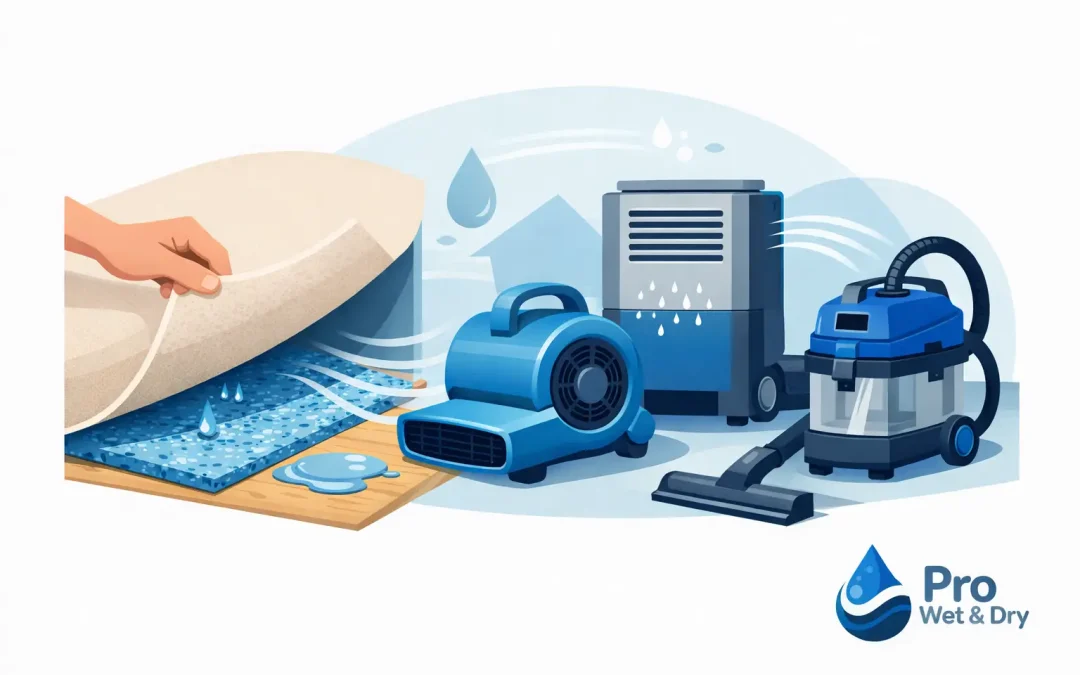
A carpet can feel dry underfoot while the layer beneath it is still holding a surprising amount of water. That is why knowing how to dry damp carpet padding matters after a spill, leaking appliance, overflowing bath or minor flooding. If moisture stays trapped in the underlay, it can lead to musty odours, mould growth, damaged flooring and a carpet that never quite feels right again.
In Australia, carpet padding is more commonly called underlay. It is usually made from foam, rubber or fibre, and its job is to provide cushioning, insulation and support. Unfortunately, those same materials can absorb water quickly. The right response depends on how much water is involved, where it came from and how long it has been sitting.
Why damp carpet padding is a bigger problem than a wet carpet
Carpet fibres are exposed to the air, so they can dry reasonably quickly with ventilation and air movement. Underlay sits between the carpet and subfloor, where air does not circulate well. Once wet, it may hold moisture against timber, concrete, particleboard or flooring adhesives for days.
This trapped moisture can produce a stale smell even after the surface looks clean. It can also cause carpet backing to delaminate, timber subfloors to swell, tack strips to rust and mould to form where you cannot see it. For homes with children, pets or allergy sufferers, that is more than a cosmetic issue.
The source of the water also changes the job. Clean water from a recently spilled drink or a supply line may be recoverable if addressed straight away. Water from a toilet overflow, drain backup, stormwater entry or external flooding should be treated as contaminated. In those situations, the affected underlay is often not suitable for drying and re-use.
Act quickly, but do not spread the water
The first few hours make the biggest difference. Remove furniture from the wet section where possible, or place aluminium foil or plastic protectors under furniture legs to reduce staining and timber damage. Keep foot traffic off the area so water is not pressed further into the padding and tracked into dry rooms.
If there is any chance water has reached power points, extension leads or electrical equipment, switch off power to the affected area only if it is safe to do so. Never handle electrical items while standing on wet carpet. A significant leak or flood may need an electrician as well as a water-damage cleaner.
Blot small surface spills with clean white towels, working from the outside towards the centre. Avoid rubbing, which can damage carpet fibres and spread a stain. A wet-and-dry vacuum can remove some water from a small clean-water incident, but it is not a substitute for proper extraction where carpet and underlay are saturated.
Do not pour buckets of cleaning solution onto wet carpet, steam clean it or rely on deodoriser to cover the smell. Adding more moisture makes drying harder, and fragrance does not remove the cause of an odour.
How to assess damp carpet underlay
A damp patch after a small spill is very different from a carpet that squelches when walked on. Check the edges of the carpet, particularly near skirting boards, doorways and the source of the leak. If practical, gently lift a corner of the carpet without pulling it off the tack strip. Feel the backing and underlay with a clean towel or gloved hand.
If the underlay is only lightly damp in a small area, was exposed to clean water and has been wet for less than 24 hours, fast extraction and controlled airflow may be enough. If it is soaked through, smells musty, has been wet overnight or longer, or the water has travelled under furniture and walls, a more thorough drying plan is needed.
Foam underlay can sometimes be dried after a clean-water event if it is extracted effectively and airflow reaches both sides. Fibre, felt and crumb-rubber underlays are more likely to retain moisture and odour. In many flood jobs, replacing the underlay is the safer and more cost-effective option than trying to save it.
The proper process to dry damp carpet padding
Professional drying is not simply a matter of pointing a fan at a wet carpet. The aim is to remove as much water as possible first, then create the right conditions for the remaining moisture to evaporate from the carpet, underlay and subfloor.
1. Stop the source and extract water
Before drying can begin, the leak or ingress point must be stopped. Industrial extraction equipment removes far more water than towels, household vacuums or a fan alone. The more water removed at this stage, the shorter the drying time and the lower the chance of damage.
For larger affected areas, technicians may lift sections of carpet to inspect the padding and subfloor. This allows water to be extracted from underneath rather than leaving it trapped behind a dry-looking surface.
2. Decide whether the underlay can stay
The underlay should be assessed for contamination, saturation, odour and material type. If clean water has affected a limited area and the padding is in good condition, it may be possible to dry it in place or temporarily lift the carpet to dry both sides.
Where water is contaminated, the underlay is heavily saturated, or there is visible mould or persistent odour, removal is generally the correct call. Keeping compromised padding can leave a problem hidden beneath an otherwise clean carpet.
3. Use controlled air movement and dehumidification
Air movers direct high-volume airflow across the carpet and, where necessary, beneath lifted sections. Dehumidifiers pull moisture from the air so evaporation can continue instead of simply moving humidity around the room. In enclosed spaces, both are usually needed.
Opening doors and windows can help on a dry, low-humidity day, but it is not always beneficial. Sydney humidity, rain or damp coastal air can slow drying by bringing more moisture indoors. The best setup depends on the weather, room size, flooring construction and extent of water damage.
4. Monitor the structure, not just the surface
A room may feel dry within hours, yet moisture can remain in the underlay or subfloor. Moisture meters and regular checks help confirm that drying is progressing properly. This is particularly useful for carpet laid over timber, particleboard or raised floors, where trapped water can cause ongoing damage.
The carpet should only be re-laid or furniture returned once the underlying materials are dry enough. Rushing this stage is how lingering odours and mould problems begin.
When you should call a flood recovery specialist
A small drink spill is usually manageable with prompt blotting and ventilation. It is worth calling for professional help when the carpet is wet across more than a small patch, water has reached underlay, the source is unknown, or the room smells damp after your initial efforts.
You should also arrange urgent assessment if water has entered from outside, come through a ceiling, affected multiple rooms, reached valuable furnishings, or come from a toilet, drain or other potentially contaminated source. Tenants and landlords should document the source and affected areas early, as water damage can worsen quickly and may need to be reported.
For offices, retail sites, hospitality venues and marine interiors, rapid extraction matters because downtime is expensive. A wet carpet can become a slip risk, create an unpleasant smell for customers and disrupt normal operations. Fast drying equipment and a clear plan help get the space usable again without cutting corners.
Avoid these common drying mistakes
Household fans can be useful for minor clean-water dampness, but they are often used too soon and without extraction. Blowing air over saturated carpet may dry the top while leaving the padding wet underneath. Heaters are another common mistake. Excessive heat can damage carpet backing, shrink some materials and increase humidity if there is no dehumidification.
Another issue is replacing furniture too early. A lounge, bed base or cabinet placed over a damp area blocks airflow and can transfer moisture into timber, fabric and upholstery. If the room must stay in use, keep furniture clear of the affected section until moisture levels are confirmed.
Do not ignore a musty smell because the carpet has stopped feeling wet. Odour is often the first sign that moisture remains below the surface. Treating the source early is far easier than dealing with mould, staining or a full carpet replacement later.
Get the carpet dry, clean and usable again
For clean-water incidents caught quickly, the right extraction and drying setup can often save both carpet and underlay. For heavier or contaminated water damage, removing affected padding and drying the subfloor properly protects the rest of the property.
Pro Wet & Dry provides industrial water extraction, targeted drying and material-specific carpet care across Sydney’s Northern Beaches. If your carpet feels damp, smells off or has been exposed to more than a minor spill, arranging an assessment early gives you the best chance of saving the carpet and avoiding a bigger repair job.