Tips & guides
Flooded Office Recovery: What to Do First
Fast flooded office recovery limits damage, mould and downtime. Learn what to do first and when professional extraction and drying are needed for staff.
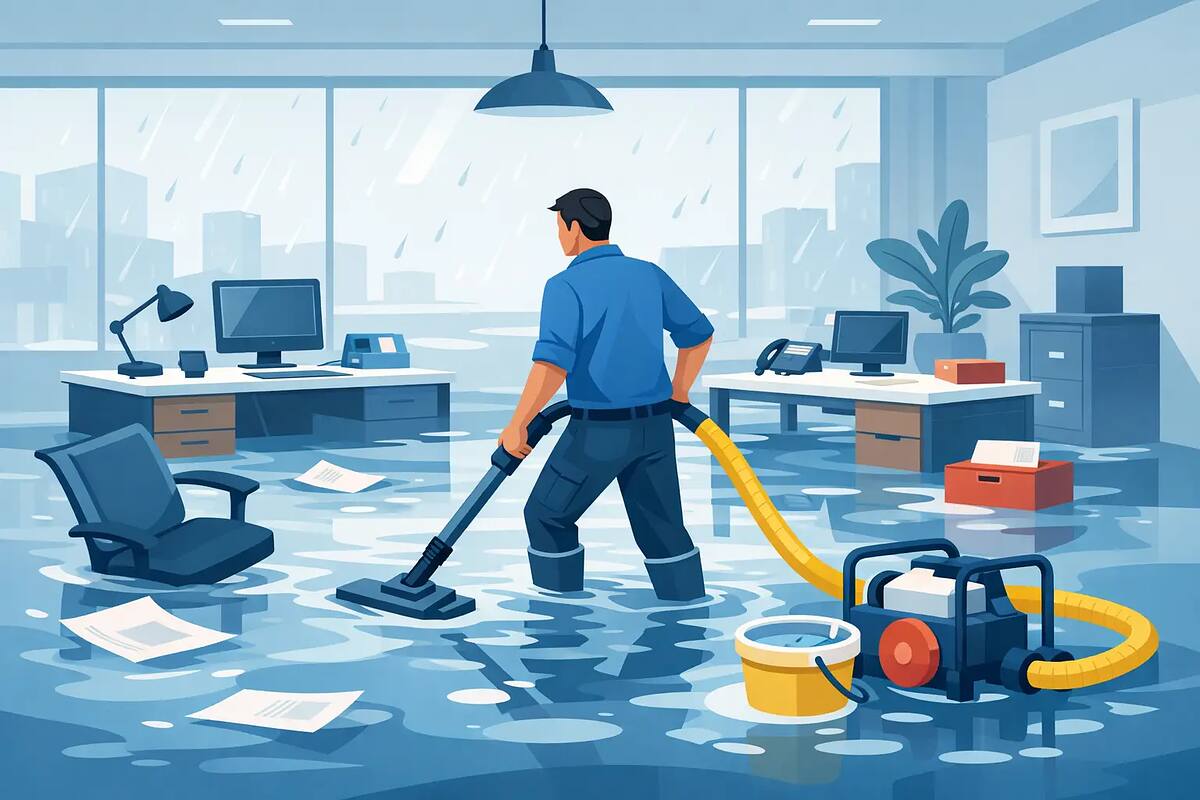
A flooded office can go from a wet patch to a business interruption problem in a matter of hours. Whether water has entered through a burst pipe, leaking roof, blocked drain or storm damage, flooded office recovery needs quick decisions. The aim is not simply to remove visible water. It is to protect people, prevent damage from spreading, dry affected materials properly and get the workplace usable again.
Make the Office Safe Before Anything Else
Do not send staff in to start mopping if there is any chance water has reached power points, extension leads, appliances or electrical equipment. Isolate electricity to the affected area where it is safe to do so, and arrange an electrician if there is uncertainty. Slips, hidden trip hazards and unstable ceiling materials are also common after a significant leak.
The source of the water must be stopped or contained first. Shut off the water supply for a plumbing issue, place containers under an active roof leak if conditions allow, or contact strata, building management or an emergency plumber. Taking photos before moving furniture can also help with insurance records and communication with landlords or property managers.
Water quality matters. Clean water from a fresh mains leak is handled differently from water that has travelled through drains, sewerage, stormwater or contaminated building materials. If the water is dirty, has an odour or has come from a toilet or drain, keep people out of the area and avoid handling affected carpet, furniture or contents without appropriate protection.
Why Fast Flooded Office Recovery Matters
Carpet can look dry on the surface while the backing, underlay and subfloor remain wet. Office chairs, fabric partitions, skirting boards and joinery can also hold moisture where it cannot be seen. Leaving that moisture in place creates the conditions for musty odours, mould growth, staining, warped materials and ongoing damage to the building.
Time also affects what can be saved. A prompt professional extraction and drying response may allow commercial carpet tiles, upholstery and soft furnishings to be restored rather than replaced. Once water has sat for too long, particularly in a warm closed office, the practical and hygiene risks increase.
The right response depends on the water source, how long it has been present, the type of flooring and whether water has spread beneath walls or into adjacent suites. A small clean-water spill on vinyl needs a different approach from several rooms of saturated carpet after a storm. Treating both situations as a simple cleaning job is where costly mistakes happen.
The First Steps After Water Enters an Office
Once the area is safe, move unaffected items away from the wet zone where possible. Lift boxes, files and portable equipment off the floor. Avoid dragging heavy desks, filing cabinets or chairs across wet carpet, as this can spread water further and damage carpet fibres.
For computers, printers and other electrical equipment, turn them off if it is safe and have them assessed by a qualified technician before use. Do not assume equipment is fine because the exterior appears dry. Moisture can remain inside power supplies, cables and internal components.
Open windows only when outdoor conditions will help drying. On a humid or rainy day, open windows may bring more moisture into the office. Household fans can move air across a small surface spill, but they are not a substitute for water extraction and controlled drying after carpet saturation. They can also spread contaminated water if the source is not clean.
Notify the relevant parties early. For a leased office, this may include the landlord, strata manager, building manager and insurer. Clear records of when the flooding was found, what caused it and the actions taken can make later discussions far more straightforward.
Extraction Is Only the Start
Water extraction removes the bulk of water from carpet and flooring, reducing the time materials remain saturated. Industrial-grade equipment can recover far more water than towels, mops or a domestic wet vacuum. This is especially relevant in larger offices, meeting rooms, retail areas and shared commercial spaces where water has travelled well beyond the original leak.
After extraction, the space needs targeted drying. Professional air movers and dehumidification equipment create the conditions needed to draw moisture out of carpet, underlay, furnishings and the surrounding air. Moisture checks guide the process, rather than relying on how the carpet feels underfoot.
This matters because drying too quickly at the surface while leaving the layers below damp can lead to a lingering smell or mould issue later. In some cases, carpet can be dried in place. In others, it may need to be lifted so the underlay and subfloor can be assessed and treated. The decision should be based on contamination, saturation levels and the materials involved, not guesswork.
Carpet Tiles, Broadloom and Hard Floors
Commercial carpet tiles may be recoverable when addressed promptly, but water can become trapped beneath them or wick into nearby tiles. Lifting selected tiles allows the subfloor to dry and helps identify whether replacement is necessary. Broadloom carpet can retain significant water through the pile and backing, particularly when underlay is involved.
Hard floors are not automatically safe from water damage. Water can travel through joins in vinyl plank flooring, laminate, timber edges and skirting boards. Timber-based materials may swell or distort, while moisture beneath resilient flooring can create adhesive issues. A proper inspection looks beyond the obvious wet area.
Furniture, Upholstery and Office Contents
Fabric office chairs, lounge seating and acoustic furnishings can absorb water quickly. Where appropriate, specialist upholstery cleaning and drying may restore them, but the water category and length of exposure will determine whether this is sensible. Contaminated water can make disposal the safer option.
Paper records need particular care. Separate wet documents gently where possible and avoid piling them together. Important files, stock and electronics may require specialist restoration or assessment outside the scope of general flood work. Acting early gives you more options.
Keeping Staff and Operations Moving
A full office closure is not always necessary. If the affected area can be isolated safely, some businesses can continue operating from another section of the premises, use meeting rooms differently or arrange short-term remote work while drying is underway. For customer-facing businesses, keeping entryways, walkways and work areas safe is the first priority.
Drying equipment does create noise and needs space, so timing should be planned around your operations where possible. After-hours work can reduce disruption for some offices, while others benefit from daytime access so building management, insurers and trades can attend quickly. There is a trade-off: delaying extraction to avoid disruption can make the final damage and downtime worse.
Communicate clearly with staff. Let them know which areas are off limits, whether power or amenities are affected, and when the workplace will be reassessed. A calm, practical update helps avoid people entering a wet area to collect belongings or restart equipment too soon.
When to Call a Professional Recovery Team
Professional help is warranted whenever carpet, underlay, furniture or building materials are saturated; when water has travelled beyond one small area; when the source may be contaminated; or when you can smell dampness after a leak. It is also the sensible call if the office needs to reopen quickly and you need evidence that extraction and drying have been handled properly.
A flood recovery team should assess the water source, affected materials and spread of moisture before setting up extraction and drying equipment. They should also explain what can reasonably be saved, what may need replacing and what the drying process will involve. That straight answer is more useful than a quick surface clean that leaves moisture behind.
For Northern Beaches businesses, Pro Wet & Dry provides industrial-grade water extraction and material-specific drying for commercial spaces affected by leaks, storms and flooding. The focus is on getting the area clean, dry and ready to use with as little disruption as the situation allows.
A wet office does not need to become a long-running building problem. Secure the area, stop the source, document the damage and arrange proper extraction and drying early. Those first hours give you the best chance of protecting your premises, your equipment and the people who rely on the space every day.
Flood Recovery
Need a hand with this?
Industrial water extraction and drying after floods, leaks and burst pipes. Pro Wet & Dry has been cleaning on the Northern Beaches since 2001.
Or call 1300 132 273