Tips & guides
How to Remove Mould Smell From Carpet Fast
Learn how to remove mould smell from carpet safely, find the moisture source and know when professional drying and treatment are needed before cleaning.
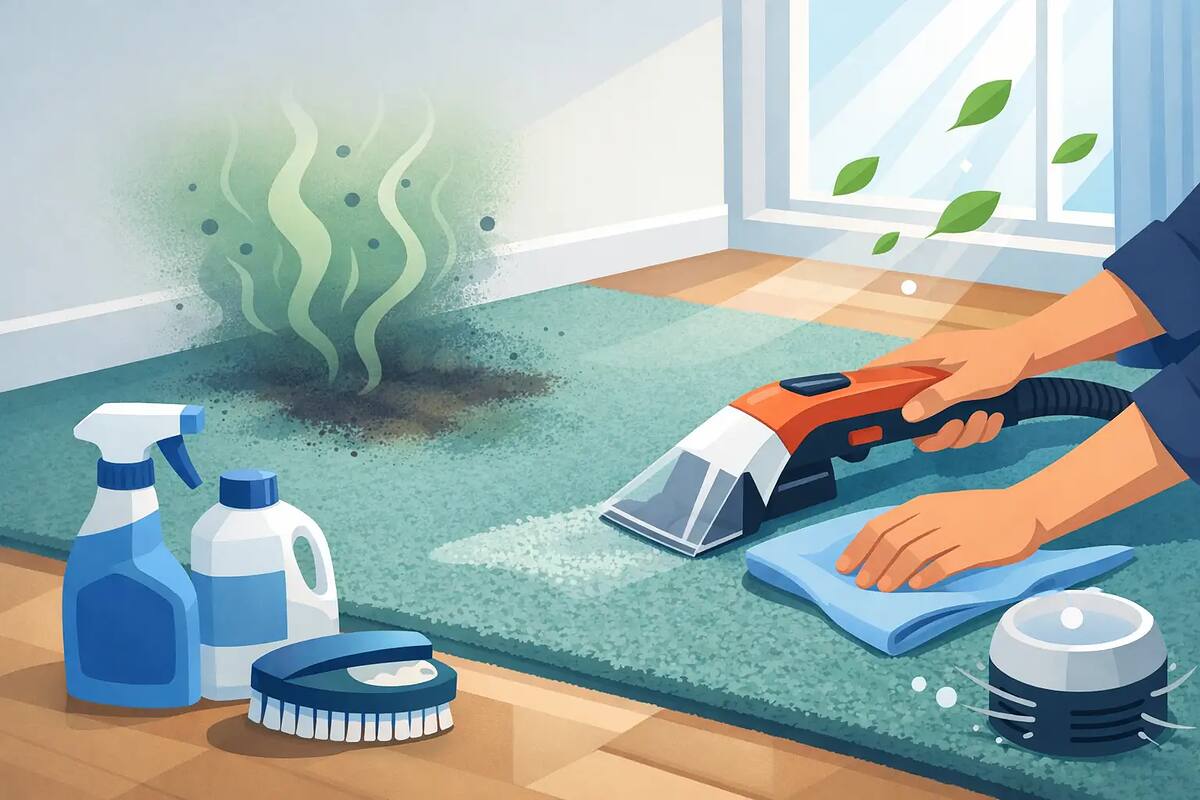
A musty carpet smell after rain, a spill or a leak is rarely just an inconvenience. If you need to remove mould smell from carpet, the first job is finding and stopping the moisture that allowed it to develop. Cleaning the surface without drying the carpet backing, underlay and floor beneath can leave the odour waiting to return.
On the Northern Beaches, damp weather, closed-up holiday properties, wet pets, overflowing washing machines and stormwater ingress can all create the conditions for mould growth. The right response depends on how wet the carpet became, how long it stayed wet and whether mould is visible.
Why a carpet develops a mouldy smell
Carpet fibres hold onto odours, but the strongest mould smell usually comes from deeper layers. Moisture can soak through the pile into the backing and underlay, where airflow is limited. Dust, skin cells, pet hair and other organic material provide a food source, and microbial growth can follow.
The smell may be obvious as soon as you enter the room, or it may appear only when the carpet is humid, walked on or heated by the afternoon sun. A visible mould patch is a clear warning sign, but an odour alone can also point to hidden dampness under furniture, along skirting boards or near an exterior wall.
Do not assume the problem is ordinary stale carpet. If the smell started after a water event, treat it as a moisture problem first.
Find the source before you clean
Start by checking whether the carpet is still damp. Press a clean, dry towel firmly into suspect areas, especially around windows, doors, bathrooms, air-conditioning units, planter boxes, washing machines and walls that back onto wet areas. A cool or clammy feel, discolouration, raised carpet edges or damp skirting can indicate water has travelled further than expected.
Move lightweight furniture and inspect underneath. A lounge positioned over a damp patch can trap humidity and make a small problem much worse. If water entered from a roof leak, burst pipe, flood or failed appliance, the affected area may extend well beyond the stain you can see.
It is also worth considering air-conditioning drainage. A blocked drain or ongoing condensation issue can repeatedly wet the same section of carpet. Until that fault is repaired, any deodorising treatment will be temporary.
How to remove mould smell from carpet safely
For a small, dry, surface-level odour with no visible mould and no active leak, careful cleaning may be enough. Ventilate the room by opening windows and doors where weather permits, then use fans to move air across the carpet. A dehumidifier can help in humid conditions, particularly in enclosed rooms.
Vacuum slowly using a machine with effective filtration once the carpet is dry. This removes loose dust and debris that can hold odours. Avoid aggressively brushing or dry-scrubbing a suspected mouldy patch, as that can disturb particles and spread them through the room.
Use a carpet-safe, manufacturer-approved cleaner only after testing it in an inconspicuous area. Lightly treat the affected section rather than soaking it. The goal is to clean the fibres without adding enough water to re-wet the backing and underlay. Blot with clean towels and dry the area immediately with airflow.
Bicarbonate of soda is sometimes used for mild odours on fully dry carpet. Spread a light layer, leave it for several hours, then vacuum thoroughly. It can absorb some surface odour, but it does not kill mould, dry an underlay or fix a leak. Treat it as a short-term aid, not a complete solution.
Avoid using bleach on carpet. It can damage colour, weaken fibres and leave an irritating residue, while still failing to reach contamination beneath the pile. Strong perfume sprays are not a fix either. They often combine with the musty odour and make it more noticeable.
Drying is the part that determines the result
A carpet can feel dry on top while the backing and underlay remain wet. This is why domestic hire machines and household fans can be useful for a minor spill but may not be enough after a significant water event. Moisture trapped below the surface needs extraction and controlled drying, not simply more detergent.
Professional water recovery equipment removes far more moisture than towel blotting or a standard wet vacuum. Technicians can assess the affected materials, lift sections where required, inspect the underlay and use targeted air movement and dehumidification to bring the area back to a dry condition.
There is a trade-off here. Pulling up carpet or replacing underlay can feel disruptive, but leaving saturated material in place can create a longer, more expensive odour and mould problem. In some cases, particularly where water was clean and the response was immediate, the carpet and underlay may be saved. In others, replacement is the safer option.
When DIY cleaning is not enough
Arrange professional assessment if the smell persists after drying and cleaning, if mould is visible, or if the carpet was wet for more than a day or two. Fast action is especially important after flooding, sewage contamination, roof leaks or water that has travelled through walls or ceilings.
You should also call in help if you notice respiratory irritation, repeated mould growth, damp walls, swollen skirting or a smell that returns whenever the room is closed. Households with young children, older people, asthma sufferers or anyone with sensitivities should be particularly cautious around suspected mould.
For rental properties, early reporting protects both the tenant and the property. Take clear photos of affected areas, note when the odour began and document the likely cause. Property managers can then organise repairs and appropriate drying before the issue spreads to adjoining rooms.
Commercial premises need the same prompt response, with the added need to minimise downtime. Wet carpet in an office, retail space or hospitality venue can affect presentation, indoor comfort and safety. A staged recovery plan can often focus on the affected zone while keeping the rest of the site operational.
What professional carpet odour treatment involves
A proper mould odour treatment is not a single spray. It begins with identifying moisture, contamination and the carpet construction. Wool, synthetic carpet, marine carpet and delicate rugs all need material-specific methods. The wrong product or excessive moisture can cause shrinkage, colour loss or damage to backing adhesives.
The affected carpet is then thoroughly extracted and dried using commercial equipment. Depending on the cause and condition, treatment may include specialised cleaning agents, sanitisation and targeted odour control. If the underlay or subfloor has been affected, those areas need attention too, otherwise the smell can migrate back into cleaned carpet.
Pro Wet & Dry provides carpet cleaning and flood recovery across the Northern Beaches, using industrial-grade recovery equipment to deal with embedded moisture and persistent odours. The focus is on getting the area clean, dry and usable again, rather than covering up the smell for a few days.
Keep the smell from returning
Once the carpet has been restored, keep indoor moisture under control. Dry wet towels and bathmats outside rather than over chairs, run exhaust fans in bathrooms and laundries, and deal with spills straight away. Leave a little space between large furniture and exterior walls to improve airflow, particularly in rooms that are rarely opened.
Check air-conditioning drains, window seals and roof areas after heavy rain. If a pet repeatedly comes inside wet from the beach or yard, use washable mats at entry points and dry paws before they reach carpeted rooms. Regular professional cleaning can also remove the soil and organic residue that make lingering odours harder to shift.
A mould smell is your carpet telling you that moisture has been sitting where it should not. Deal with the water source, dry the layers properly and choose cleaning that suits the carpet material. That gives you the best chance of a fresh room that stays fresh.
Odour Removal
Need a hand with this?
Pet urine, vomit and lingering smells treated at the source, not masked. Pro Wet & Dry has been cleaning on the Northern Beaches since 2001.
Or call 1300 132 273