Tips & guides
Commercial Sofa Cleaning Guide for Busy Premises
Use this commercial sofa cleaning guide to protect fabric seating, manage spills and odours, and plan fast, practical care with minimal daily disruption.

A reception sofa can look tired long before the rest of a workplace does. Darkened armrests, food spills, make-up marks, pet hair from visiting clients and lingering odours all affect how customers, staff and tenants judge a space. This commercial sofa cleaning guide explains how to care for upholstered seating properly, reduce downtime and know when professional treatment is the sensible option.
Commercial lounges work harder than residential furniture. They may be used every day by dozens of people, often without the protection of throws, regular vacuuming or immediate spot treatment. Cleaning needs to be planned around the fabric, the level of use and the need to keep your premises presentable.
Start with the Sofa’s Material and Condition
The quickest way to cause damage is to treat every sofa as though it has the same fabric and cleaning requirements. Commercial seating may be made from synthetic upholstery, cotton blends, wool, velvet, leather or delicate mixed fabrics. Each reacts differently to moisture, heat, agitation and cleaning products.
Before any cleaning begins, check the manufacturer’s care label where available. The label may identify whether the fabric can be cleaned with water-based products, solvent-based products or vacuuming only. It is useful information, but it is not a complete cleaning plan. A sofa’s age, dye stability, previous cleaning attempts and existing stains can change what is safe.
Leather deserves separate treatment. Flooding leather with water, using strong degreasers or applying household sprays can strip its finish and leave it dry or patchy. It needs cleaning products designed for leather, followed by appropriate conditioning where required.
For heavily used office, hospitality or common-area seating, a technician should test an inconspicuous area first. This helps identify risks such as colour transfer, shrinking, water marks or fabric distortion before the visible sections are cleaned.
Build a Commercial Sofa Cleaning Routine
A good maintenance plan does not mean deep-cleaning every sofa each week. It means dealing with dry soil, fresh spills and high-contact areas before they become embedded problems.
Vacuum upholstered seating regularly, including under cushions, along seams and around buttons or piping. Dry grit is abrasive. Every time someone sits down, fine sand, dust and food particles can grind further into the fibres. This is one reason fabric can become dull and rough even when there are no obvious stains.
High-touch zones need extra attention. Armrests, headrests and seat fronts collect body oils, sunscreen, hair products and general grime. In a waiting room or showroom, these areas may need light attention between scheduled professional cleans.
For most businesses, a practical schedule includes regular vacuuming by onsite staff, immediate spill response and periodic professional cleaning. The right frequency depends on foot traffic. A small office boardroom may only require an annual clean, while a busy reception area, medical practice, retail centre or hospitality venue may benefit from cleaning every six months or sooner.
Deal With Spills Quickly, Not Aggressively
When coffee, wine, food or a soft drink lands on a sofa, speed matters. The goal is to remove as much of the spill as possible without forcing it deeper into the fabric.
Blot the affected area with a clean white cloth or plain paper towel. Work from the outside of the spill towards the centre so it does not spread. Avoid rubbing, which can fray fibres and push staining material below the surface.
Do not soak the fabric. Too much water can create tide marks, affect foam cushioning or leave the sofa damp long enough for musty odours to develop. Avoid reaching for strong supermarket stain removers unless you know they are suitable for that exact material. Some products bleach colour, leave a sticky residue that attracts more soil or react badly with previous treatments.
If the spill contains oil, protein, ink or dye, basic blotting may not be enough. Coffee with milk, greasy takeaway food, make-up, wine and pen marks often need targeted products and controlled extraction. Taking a quick photo and noting what was spilled can help a cleaner choose the right treatment later.
Odours need more than surface freshener
Sprays can temporarily mask odours, but they do not remove the source. Food residue, body oils, moisture, mould, smoke and pet contamination can settle into the fabric, cushion filling and base lining. If a sofa smells worse on humid days or after people have been sitting on it, the contamination may be deeper than the visible upholstery.
Effective odour treatment starts with finding the cause. A suitable cleaning method can then lift soil and contaminants from the fibres, while specialised treatment may be needed for persistent biological odours. Where moisture has entered foam or internal cushioning, drying is just as important as cleaning.
Choose the Right Professional Cleaning Method
There is no single method that suits every commercial sofa. The best approach depends on the upholstery type, soiling level, stain type and how quickly the furniture needs to be back in use.
Hot water extraction for washable fabrics
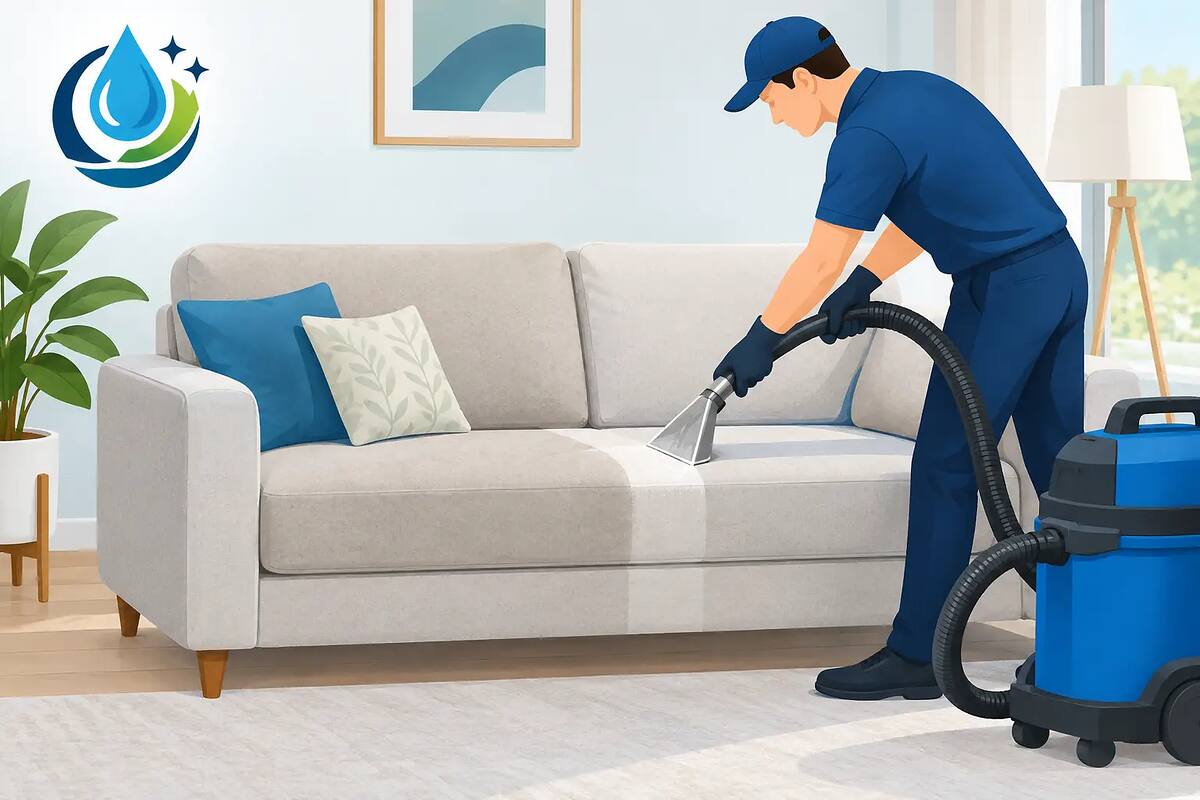
Hot water extraction, often called steam cleaning, can be highly effective for many durable fabric sofas. It uses cleaning solution, controlled moisture and powerful recovery equipment to flush out embedded soil and remove it from the upholstery.
The key is controlled application and strong extraction. A sofa should not be left saturated. Proper equipment removes a significant amount of moisture during the process, supporting faster drying times and reducing the chance of water marks or odours. Ventilation, air movement and the fabric type all affect drying time.
Low-moisture cleaning for limited downtime
Some commercial environments cannot have seating out of action for long. Low-moisture methods can be a practical choice for suitable fabrics, particularly where light to moderate soiling is the issue and rapid turnaround is needed.
The trade-off is that low-moisture cleaning may not be the best answer for deeply embedded grime, extensive staining or contamination in the cushion filling. It can freshen and maintain upholstery well, but a more thorough restorative clean may be needed at intervals.
Fabric-specific spot treatment
Stain removal is rarely a one-product job. Ink, rust, wine, grease, urine, cosmetics and food colouring all respond differently. Professional cleaners use material-specific products and techniques, then rinse or extract residues where appropriate.
Not every stain can be completely removed, particularly if it has been heat-set, repeatedly treated with unsuitable chemicals or left for a long time. However, careful treatment can often improve the appearance substantially without damaging the upholstery.
Prepare Your Premises for Cleaning Day
A little preparation helps the job run smoothly and keeps interruption to a minimum. Clear personal items, brochures, cushions and loose rubbish from the sofas. Let staff know which areas will be unavailable and arrange alternate seating if the furniture is in a customer-facing zone.
If there are known stains, odours or previous DIY treatments, point them out before cleaning starts. This saves guesswork and allows the cleaner to assess expectations honestly. It is also worth mentioning whether the sofa has a removable cover, whether there has been a leak nearby, or whether it is part of a tenancy handover or end-of-lease requirement.
After cleaning, allow the upholstery to dry fully before heavy use. Keep air-conditioning or ventilation running where possible, and avoid placing cushions back on damp seats. This simple step protects the result and prevents pressure marks.
When Cleaning Is Not Enough
Professional cleaning can restore many sofas that look ready for replacement, but it cannot repair every issue. Torn fabric, broken webbing, collapsed foam, severe sun fading and permanent dye loss are upholstery repair or replacement matters rather than cleaning problems.
The practical question is whether the sofa is structurally sound and worth preserving. For quality commercial furniture, a planned clean can extend its usable life and improve the presentation of a space at a fraction of replacement cost. For badly damaged low-cost seating, replacement may be more economical.
For Northern Beaches businesses, Pro Wet & Dry can assess fabric, leather and difficult odour or stain issues before recommending a method. The aim is straightforward: get valuable seating clean, hygienic and ready to use without unnecessary disruption.
A sofa does not need to look visibly filthy before it needs attention. Treating spills early, vacuuming often and arranging material-appropriate cleaning when soil starts to build up will keep your premises looking cared for and help your furniture last longer.
Upholstery Cleaning
Need a hand with this?
Lounge, sofa and chair cleaning for fabric and leather, at home or in commercial spaces. Pro Wet & Dry has been cleaning on the Northern Beaches since 2001.
Or call 1300 132 273