Tips & guides
Best Commercial Carpet Cleaning Schedule for Your Site
Find the best commercial carpet cleaning schedule for your premises, balancing foot traffic, hygiene, appearance and downtime for staff and customers.
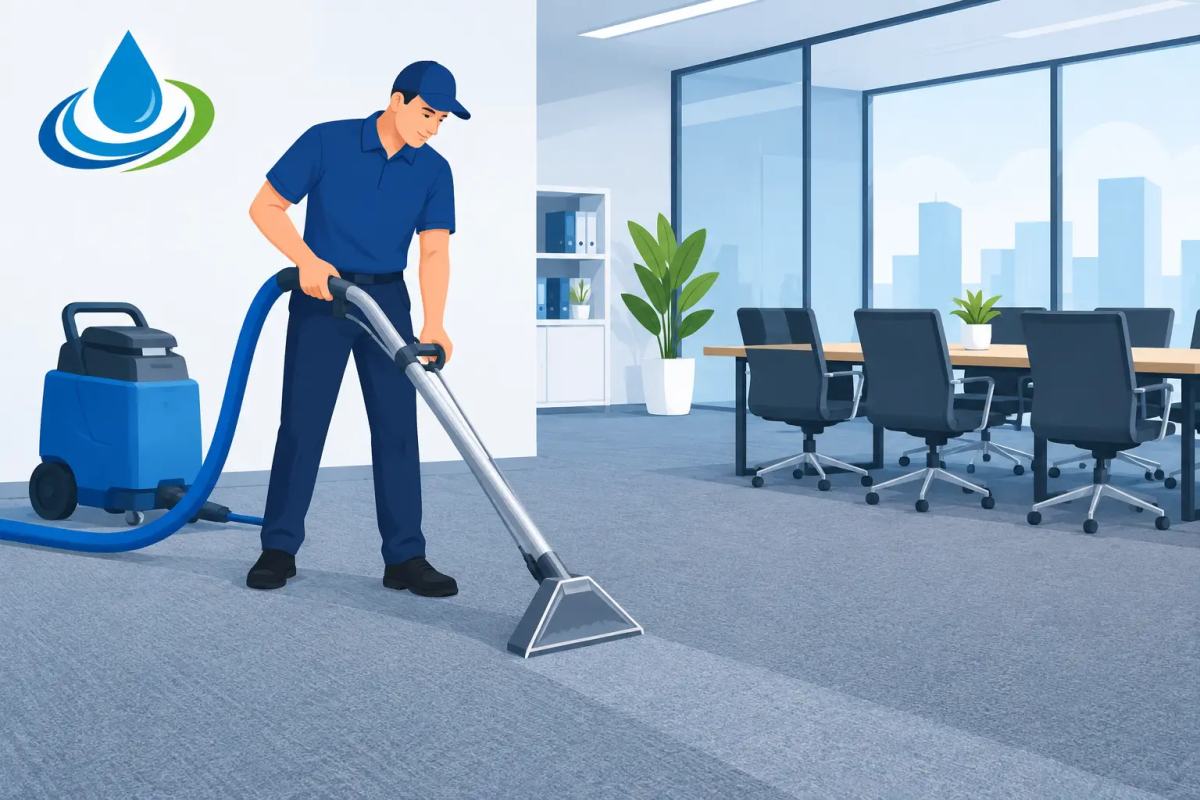
A carpet can look acceptable from the doorway while holding weeks of tracked-in grit, food residue and moisture through its busiest walkways. The best commercial carpet cleaning schedule is not simply a fixed annual booking. It matches how your premises are used, where people walk, what gets spilled and how much downtime your operation can accommodate.
For an office, retail shop, medical practice or hospitality venue, the right schedule protects the carpet fibres as well as the impression customers and staff get when they walk in. Clean carpet also helps reduce odours, allergens and the dull, flattened appearance that makes an otherwise well-kept space feel tired.
Start with traffic, not a calendar date
The most practical way to set a cleaning schedule is to separate your carpet into traffic zones. A reception entry, corridor, lift landing, break room and point-of-sale area do not wear at the same rate as a closed meeting room or back office.
High-traffic areas need more frequent attention because dry soil acts like sandpaper under shoes. Each step pushes grit further into the pile, abrading fibres and making the carpet look grey or crushed. Waiting until the whole carpet visibly looks dirty is usually too late for the busiest sections.
Think about the daily reality of your premises. Wet weather can bring in mud and moisture. Cafes and staff kitchens create food and drink spill risks. Retail sites collect street dirt all day. Medical and childcare settings have stricter hygiene expectations. A schedule should be built around those conditions, not copied from another business.
A practical commercial carpet cleaning schedule
For most commercial premises, routine vacuuming should happen daily in high-use zones and at least several times a week elsewhere. Vacuuming removes loose dry soil before it is ground into the carpet, but it does not replace professional extraction cleaning.
As a working guide, the following frequencies suit many businesses:
- High-traffic entrances, corridors and customer areas: professional cleaning every three to six months.
- Standard offices, meeting rooms and general work areas: professional cleaning every six to 12 months.
- Hospitality, childcare, healthcare and heavily used retail spaces: professional cleaning every one to three months, with spot treatment as needed.
- Low-use rooms, executive offices and occasional-use areas: professional cleaning every 12 to 18 months, unless spills or odours require earlier work.
These are starting points, not hard rules. A busy café near the beach may need more frequent maintenance through wet weather. An office where staff mostly work remotely may be fine with an annual full clean and targeted treatment of reception and common areas in between.
Use a two-level approach
The most cost-effective schedule is often a combination of regular targeted cleans and a less frequent full-site clean. Instead of paying to deep clean every square metre at the same interval, arrange for high-wear areas to be cleaned more often and have the whole site professionally cleaned once or twice a year.
This approach keeps customer-facing areas presentable without treating low-use spaces unnecessarily. It also reduces the chance of permanent traffic lanes forming at entries and along corridors.
What changes the frequency?
Foot traffic is the obvious factor, but it is not the only one. The carpet type, colour, pile height and location all affect how quickly marks show and how easily soil is removed. Light-coloured carpet may need more frequent maintenance for appearance, while dark carpet can hide grime until the fibres have already taken a beating.
Food and beverage service changes the equation too. Coffee, wine, oily food and soft drink spills should be dealt with promptly, not saved for the next scheduled clean. The same applies to pet accidents in pet-friendly workplaces, mould concerns after water ingress and persistent odours around bins, kitchens or bathrooms.
Air-conditioning issues can also contribute to carpet problems. Condensation, leaks or poor airflow may leave damp patches that encourage musty smells. If carpet feels damp or smells stale, the priority is finding and fixing the moisture source before cleaning. Otherwise, the problem will return.
Seasonal conditions matter across Sydney as well. Rainy periods increase mud and moisture at entrances, while summer foot traffic can bring in sand, dust and sunscreen residue. Reviewing your cleaning needs after a particularly wet season is sensible, especially for premises close to the beach or with direct street access.
Choose cleaning times that do not disrupt trade
A proper commercial carpet clean should fit around your business, not force you to work around it. For many offices, after-hours or weekend cleaning avoids disruption. Retailers may prefer early morning work before doors open, while hospitality venues often need a tailored window between service periods.
Fast drying times are a major part of the plan. Professional hot water extraction equipment removes embedded soil while recovering as much moisture as possible, helping carpets dry sooner. Drying time still depends on carpet construction, weather, ventilation, humidity and the level of soiling, so it is worth discussing access to fans, air-conditioning and open windows before the job begins.
Avoid booking a full clean immediately before a major event, inspection or busy trading day if there is no allowance for drying. A better approach is to schedule it early enough that the carpet is fully dry and the space can be checked before people return.
Build spot treatment into the routine
Even the best schedule will not prevent accidents. The difference is how quickly your team responds when they happen. Keep a simple spill-response process available to staff: blot liquid immediately with a clean white cloth, work from the outside of the mark towards the centre and avoid scrubbing. Scrubbing spreads the spill and can damage the carpet pile.
Do not pour random supermarket products onto commercial carpet without checking the fibre and stain type. Some products leave a sticky residue that attracts more soil, while others can affect colour or backing. Bleach, strong solvents and excessive water are especially risky.
For difficult stains, odours or unknown substances, call a professional sooner rather than later. Fresh stains are generally easier to treat than marks that have dried, been walked over or previously treated with the wrong chemical.
Watch for signs your schedule is too spread out
A carpet does not need to be visibly filthy before it needs professional attention. Dull paths through walkways, dark edges near skirting boards, recurring odours and carpet that feels stiff or flattened are all signs that embedded soil is building up.
Other warning signs include stains reappearing after a basic clean, increased complaints about odours, or a reception area that no longer reflects the standard of the business. If cleaning only happens when someone complains, the schedule is reactive rather than preventative.
For property managers, regular maintenance also makes end-of-lease or tenancy-change cleans easier. Carpets that receive periodic professional care are generally more likely to respond well than carpets left for years with heavy soil, drink spills and neglected traffic lanes.
Get the method right for the carpet
Not every commercial carpet should be treated exactly the same way. Fibre type, pile construction, backing and the condition of the carpet affect the safest and most effective method. A cleaner should assess the surface before selecting cleaning products and equipment, particularly where there are wool blends, delicate fibres, glued-down tiles or significant staining.
The goal is not simply to make the carpet look better for a day. It is to remove soil effectively, treat spots properly and leave the carpet ready for normal use as quickly as possible. Specialist equipment and material-specific methods make a clear difference when the issue is ingrained grime, odour or water damage rather than light surface dust.
For Northern Beaches businesses, Pro Wet & Dry can set up maintenance cleaning around your actual foot traffic, operating hours and carpet condition. That means targeted care where it is needed, rather than a one-size-fits-all interval that does not suit the site.
A cleaning schedule works best when it is reviewed after a few services. If entry areas are staying fresh but the staff kitchen is deteriorating early, adjust that zone. Keeping the plan flexible is how carpet stays cleaner, lasts longer and remains ready for the people who use your premises every day.
Odour Removal
Need a hand with this?
Pet urine, vomit and lingering smells treated at the source, not masked. Pro Wet & Dry has been cleaning on the Northern Beaches since 2001.
Or call 1300 132 273