Tips & guides
How to Remove Red Wine Stains From Carpet
Learn how to remove red wine stains from carpet quickly, avoid setting the spill, and know when specialist cleaning delivers the best result at home.
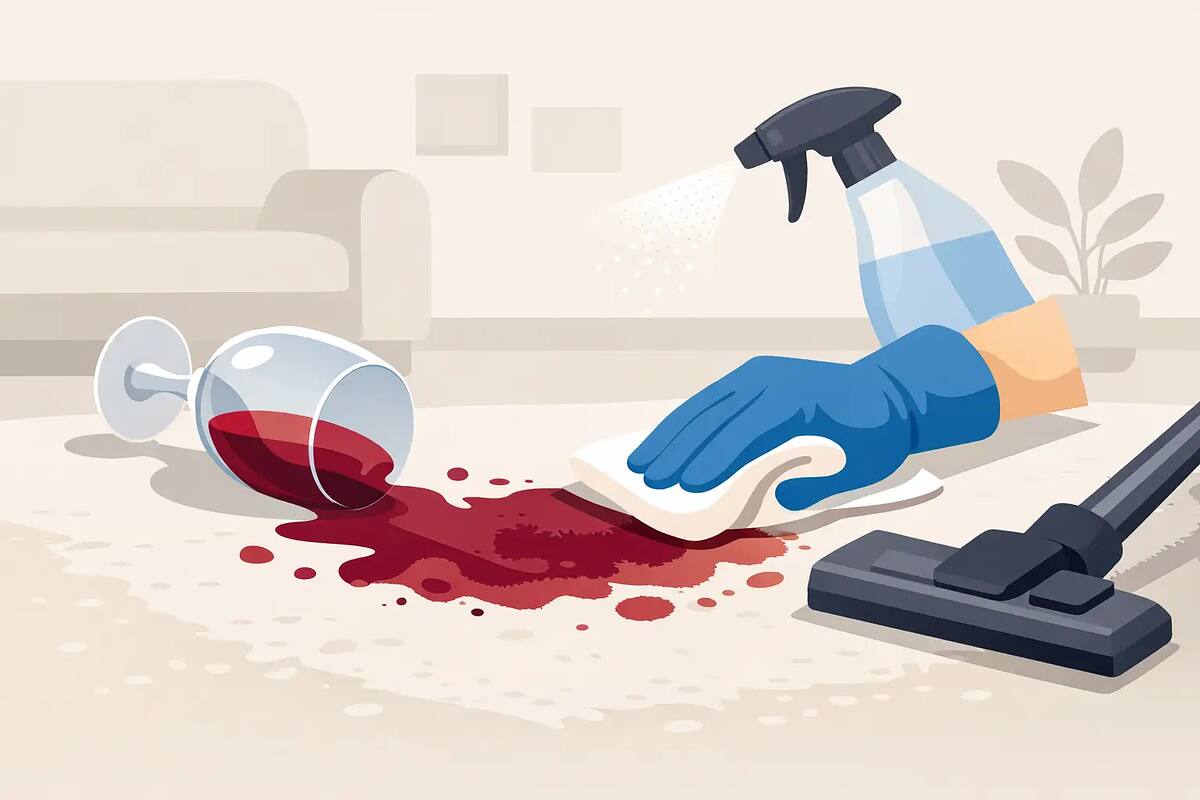
A tipped glass does not have to mean a ruined carpet, but the first few minutes matter. To remove red wine stains from carpet, work quickly, keep the affected area as dry as possible and avoid rubbing the spill deeper into the fibres. The aim is to lift the wine out, not spread it around or force it into the carpet backing.
Red wine contains strong natural pigments and tannins. On pale carpet, wool, natural-fibre rugs and heavily textured piles, those pigments can bind to the fibres quickly. A calm, methodical response gives you the best chance of stopping a small spill becoming a permanent red or purple patch.
Remove Red Wine Stains From Carpet: Act Before It Dries
Start by removing any solid debris, such as broken glass or food, without dragging it over the carpet. Then place a clean white absorbent cloth or plain white paper towel over the spill and press down firmly. Replace it as it becomes wet and repeat until it is no longer drawing up much wine.
Do not scrub. Scrubbing roughens carpet fibres, pushes wine deeper into the pile and can leave a fuzzy-looking patch that catches the light differently from the surrounding carpet. It can also spread the stain well beyond the original spill.
Avoid coloured towels, printed paper towels and anything that may transfer dye. A white cloth lets you see whether wine is still lifting and reduces the risk of adding another colour problem to the carpet.
If the spill has reached the underlay, continue blotting with dry towels and apply pressure by standing carefully on a folded towel. Do not soak the area in water. Excess moisture can drive staining further down, create a musty odour and leave a larger damp area to dry.
Use a Gentle Cleaning Solution First
Once you have blotted up as much wine as possible, test any cleaning product in a hidden section of carpet. This is particularly important for wool, silk, viscose, jute, seagrass and handwoven rugs. Different fibres, dyes and backings react differently, and a product that works on a synthetic carpet can damage a natural one.
For many colourfast synthetic carpets, a small amount of clear, mild dishwashing liquid mixed with cool water is a sensible first step. Dampen a clean white cloth with the solution - do not pour it directly onto the carpet - then blot from the outside edge of the stain towards the centre. This helps prevent the mark from spreading.
Work in short passes. Blot with the cleaning solution, then blot again with a separate cloth lightly dampened with clean cool water to remove detergent residue. Finish with a dry towel to draw out moisture. If the stain is reducing, repeat patiently rather than making the mix stronger or saturating the carpet.
Some carpet manufacturers recommend specific spot-cleaning products, so check the care information where possible. A purpose-made carpet spotter can be useful, provided it is suitable for your carpet type and used exactly as directed. More product is not better. Leftover detergent can attract dirt after the carpet dries, turning a red wine incident into a dull grey traffic mark.
Keep Heat and Harsh Chemicals Out of It
Hot water can set certain stains and may affect dyes or carpet backing, so use cool or lukewarm water only. Steam from a household appliance is also not a fix for fresh red wine. Professional hot water extraction is a controlled process using the right chemistry, temperature, extraction power and drying technique - it is very different from applying heat to a stain at home.
Be careful with online remedies such as salt, white wine, bicarb soda, bleach and peroxide. Salt may absorb surface moisture but does not reliably remove the pigment, while granules can work into the pile. White wine simply adds more liquid. Bleach and peroxide can strip colour, weaken fibres or leave a pale patch that is more obvious than the original stain.
This is especially true on wool carpet, where alkaline products and strong oxidising agents can cause permanent damage. If you are unsure what your carpet is made from, treat it as delicate and stop after gentle blotting.
What to Do if the Stain Is Already Dry
A dried red wine stain is not always permanent, but it is less predictable. The wine may have bonded with the fibres, and previous cleaning attempts may have changed the stain or left residue behind.
Begin by lightly dampening the area with cool water and blotting it with a white cloth. This can soften dried residue without flooding the carpet. Follow with a carpet-safe spot treatment after a patch test, then blot and rinse as directed. Give the area time to dry fully before deciding whether the mark is gone. Damp carpet often looks darker, making it difficult to judge the result.
If a faint pink, purple or brown shadow remains after drying, avoid repeated experiments with stronger chemicals. This is the point where professional stain treatment is usually the safer option. A technician can identify the fibre, assess whether the mark is dye-based, tannin-based or affected by previous products, and select a material-specific treatment.
When Professional Carpet Cleaning Is the Better Call
A quick DIY response is often enough for a small, fresh spill on durable synthetic carpet. It depends, though, on the amount of wine, how long it has been sitting, the carpet material and what has already been used on it.
Professional help is worthwhile when wine has soaked through to the underlay, the stain is on wool or a valuable rug, the spill covers a large area, or a previous attempt has left a visible ring. It is also a practical choice for rental properties, end-of-lease cleans, offices, hospitality venues and homes where presentation matters straight away.
A proper treatment is not just about making the red mark less noticeable. Specialist equipment can flush loosened contamination from the pile and recover it rather than leaving it behind. Controlled extraction helps reduce excess moisture, which supports faster drying times and a more usable room after cleaning.
For Northern Beaches homes and businesses, Pro Wet & Dry uses carpet-appropriate methods and professional recovery equipment to deal with difficult stains without taking shortcuts. The right approach protects the carpet’s colour, texture and backing while improving the chance of a clean, even finish.
Prevent a Ring While the Carpet Dries
After spot cleaning, place a dry white towel over the damp area and weigh it down gently for a short time. Change the towel if it becomes wet. Keep foot traffic, pets and furniture off the area until it is dry, and encourage airflow with open windows or a fan where practical.
Do not cover damp carpet with a plastic sheet or place furniture legs back on it straight away. Trapped moisture can cause odours, while furniture can flatten the pile or transfer dye. Once dry, vacuum the area gently to lift the carpet fibres back into place.
If the stain reappears as the carpet dries, it may be wicking from deeper in the pile or underlay. Blotting the surface again may help temporarily, but recurring marks usually need deeper extraction rather than more spot cleaner.
A wine spill is frustrating, particularly on a light lounge-room carpet just before guests arrive. Deal with it promptly, use the gentlest effective method and know when to stop. Preserving the carpet is always better value than turning a manageable stain into permanent damage.
Stain Removal
Need a hand with this?
Red wine, coffee, food, ink and more. Specialised products and equipment for tough stains. Pro Wet & Dry has been cleaning on the Northern Beaches since 2001.
Or call 1300 132 273