Tips & guides
Steam Carpet Cleaning Versus Encapsulation
Steam carpet cleaning versus encapsulation: compare soil removal, drying time and best-use cases to choose the right method for your carpets locally.
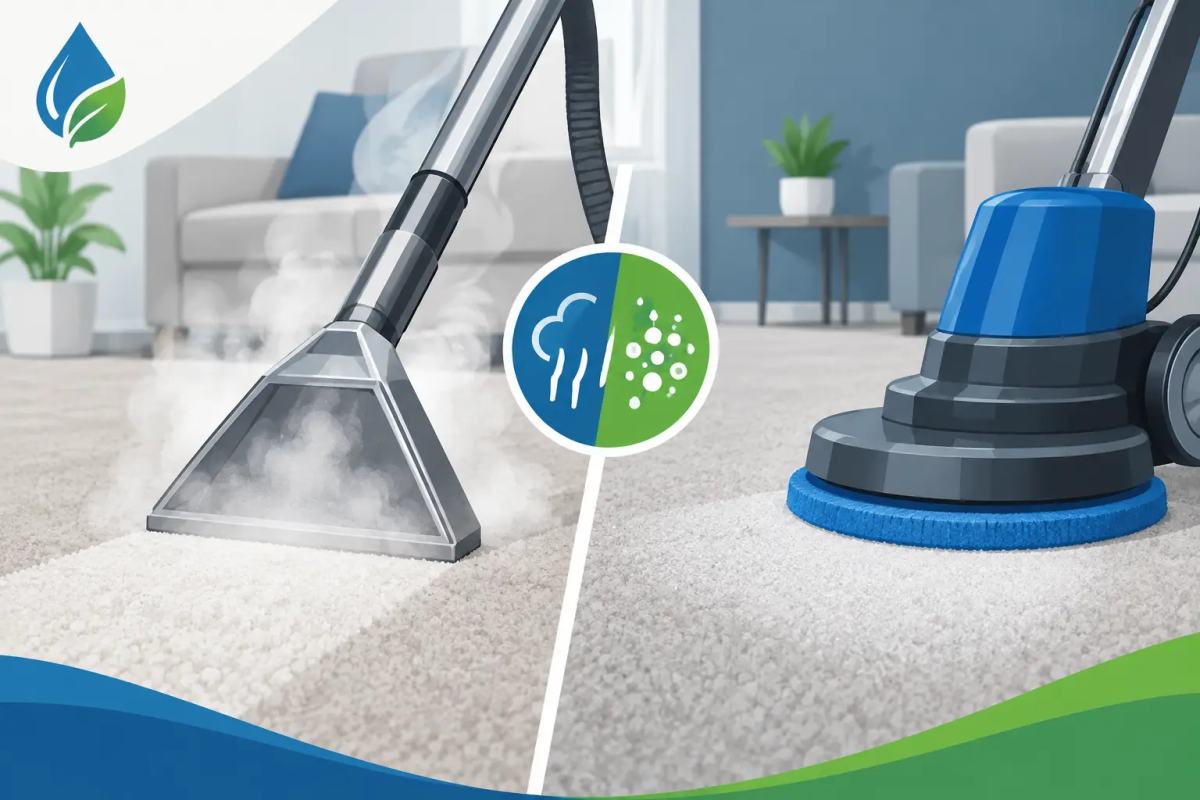
A carpet can look clean after a quick low-moisture treatment yet still hold the grit, spills and pet residue that sit deep around the fibres. That is why the choice between steam carpet cleaning versus encapsulation matters. Both methods have a place, but they do different jobs. The right option depends on the carpet material, the level and type of soiling, how quickly the area needs to be back in use, and whether odours or stains are part of the problem.
For a lightly soiled office carpet that needs to be walked on soon, encapsulation can be a practical maintenance method. For family-room carpet carrying muddy foot traffic, food spills, pet accidents or built-up grime, hot water extraction is usually the more thorough solution. Getting the job done properly starts with matching the method to the condition of the carpet.
Steam Carpet Cleaning Versus Encapsulation: The Main Difference
Despite the name, professional “steam cleaning” is generally hot water extraction rather than filling the room with steam. A technician applies a controlled cleaning solution, works it into the carpet where needed, then uses heated water and powerful extraction to flush out suspended soil. Industrial recovery equipment removes the dirty water, cleaning solution and contaminants from deep within the pile.
Encapsulation is a low-moisture cleaning process. A cleaning product containing encapsulating polymers is applied to the carpet, usually with a machine that agitates the fibres. As the carpet dries, the product surrounds or crystallises loose soil. The dried residue is then removed by vacuuming, either during the service or as part of the next scheduled vacuum.
The key distinction is simple: hot water extraction is designed to rinse and recover soil from the carpet, while encapsulation is designed to capture surface and light embedded soil so it can be vacuumed away. Neither is automatically better. Their value comes down to the result you need.
When Hot Water Extraction Is the Better Choice
Steam carpet cleaning is often the stronger option when carpets need a deeper reset. It is particularly useful in busy homes, rental properties between tenants, hospitality spaces and commercial areas with visible traffic lanes. These are the situations where ordinary vacuuming and low-moisture cleaning may improve appearance but cannot always remove the volume of material trapped below the surface.
It is also the preferred method for many specific problems. Ground-in dirt, tracked-in sand, drink spills, greasy marks and pet-related contamination usually require more than a surface clean. Effective treatment may involve targeted stain products, odour treatment, agitation and thorough extraction. A proper rinse helps remove both the contaminant and the cleaning products used to treat it.
For households with children, pets or allergy concerns, extraction can provide a more substantial clean because it physically removes fine debris, rather than simply freshening the top of the carpet. That said, cleaning alone is not a substitute for resolving a moisture issue, mould problem or persistent source of odour beneath the carpet. If pet urine has soaked through to the underlay, for example, treatment needs to address the affected layers rather than masking the smell at the surface.
Modern professional extraction does not have to mean carpets stay wet for days. Drying time depends on humidity, airflow, carpet thickness, soil level and how much moisture is necessary for the job. With suitable equipment and correct technique, many carpets are dry within several hours. Opening windows where practical, using fans and keeping air moving will help.
Carpet type changes the approach
Not every carpet should be cleaned in exactly the same way. Synthetic carpets can often tolerate a stronger rinse and more agitation than delicate natural fibres. Wool, silk blends, hand-woven rugs and certain speciality carpets need carefully selected products, controlled moisture and lower-risk cleaning methods.
A reliable cleaner assesses the fibre, backing, condition and colour stability before deciding on the process. More water is not always better, especially where there is a risk of shrinkage, dye bleed, browning or damage to sensitive backings. Professional cleaning is about controlled cleaning, not soaking the carpet.
Where Encapsulation Makes Sense
Encapsulation is useful where fast drying and low disruption are the priority. It is commonly used as part of planned commercial maintenance in offices, retail spaces, common areas and venues that cannot be closed for long. Because it uses less moisture, carpets can often be ready for light use much sooner than after extraction.
It can also be a sensible interim clean for carpets that receive regular vacuuming and have only light to moderate dry soil. A well-maintained commercial carpet may benefit from encapsulation between periodic deep extraction cleans. This can help keep the pile looking more even, reduce the appearance of traffic lanes and extend the period between larger restorative cleans.
The method is less suited to heavily soiled carpet, sticky residues, significant spills, oily contamination or strong odours. If the carpet has absorbed pet urine, food, drink or other organic material, encapsulation may make it look better without fully removing the source. It is also not the best answer after water damage or flooding, where rapid extraction, drying and moisture control are needed to prevent further damage.
Encapsulation relies on effective vacuuming after the product dries. If a carpet is not vacuumed properly, the crystallised soil and residue can remain in the pile. This is one reason the method works best in properties with a reliable cleaning routine, rather than as a one-off fix for neglected carpet.
Drying Time, Appearance and Long-Term Results
Drying time is usually the first reason people consider encapsulation. If a business has customers arriving in a few hours or a household has limited access to rooms, low-moisture cleaning can be convenient. However, speed should not be the only measure of a good result.
A fast-drying carpet that still contains old spills, soil and odour is not necessarily clean in the way the property needs it to be. On the other hand, a deep extraction clean may be unnecessary for a lightly soiled office that is cleaned frequently and needs minimal downtime. The best decision balances presentation, hygiene, use of the space and the carpet’s condition.
Appearance can also be misleading. Traffic lanes sometimes darken because the carpet fibres are flattened, worn or permanently stained, not simply dirty. Cleaning can improve the look, but it cannot reverse fibre wear. A capable technician will set realistic expectations before treatment rather than promising that every old mark will disappear.
Choosing the Right Method for Your Property
Start with the practical questions. Is the carpet lightly dusty or visibly dirty? Are there odours, stains, pet accidents or oily marks? Is this a regular maintenance clean, an end-of-lease requirement or a restorative clean after months of use? How much drying time is available?
For a quick commercial refresh with light soil and a tight turnaround, encapsulation may be the sensible choice. For a home with pets, children, stains or a carpet that feels gritty underfoot, hot water extraction will usually deliver the more complete result. Many properties benefit from both methods at different times: low-moisture maintenance during the year, followed by periodic deep cleaning to remove what routine cleaning leaves behind.
For Northern Beaches homes and businesses, Pro Wet & Dry assesses the material and the actual problem before recommending a method. That means treating stubborn stains and odours where needed, using appropriate equipment for deep recovery, and avoiding a one-size-fits-all approach.
If you are unsure which process your carpet needs, do not choose based on drying time alone. A quick assessment of the fibre, soil level and any underlying odour or stain issue will point to the treatment that leaves the carpet cleaner, safer to use and ready for the way you live or work.
Odour Removal
Need a hand with this?
Pet urine, vomit and lingering smells treated at the source, not masked. Pro Wet & Dry has been cleaning on the Northern Beaches since 2001.
Or call 1300 132 273