Tips & guides
Can Carpet Cleaning Reduce Allergens at Home?
Can carpet cleaning reduce allergens? Learn what professional steam cleaning removes, what it cannot fix, and how to keep carpets healthier at home daily.
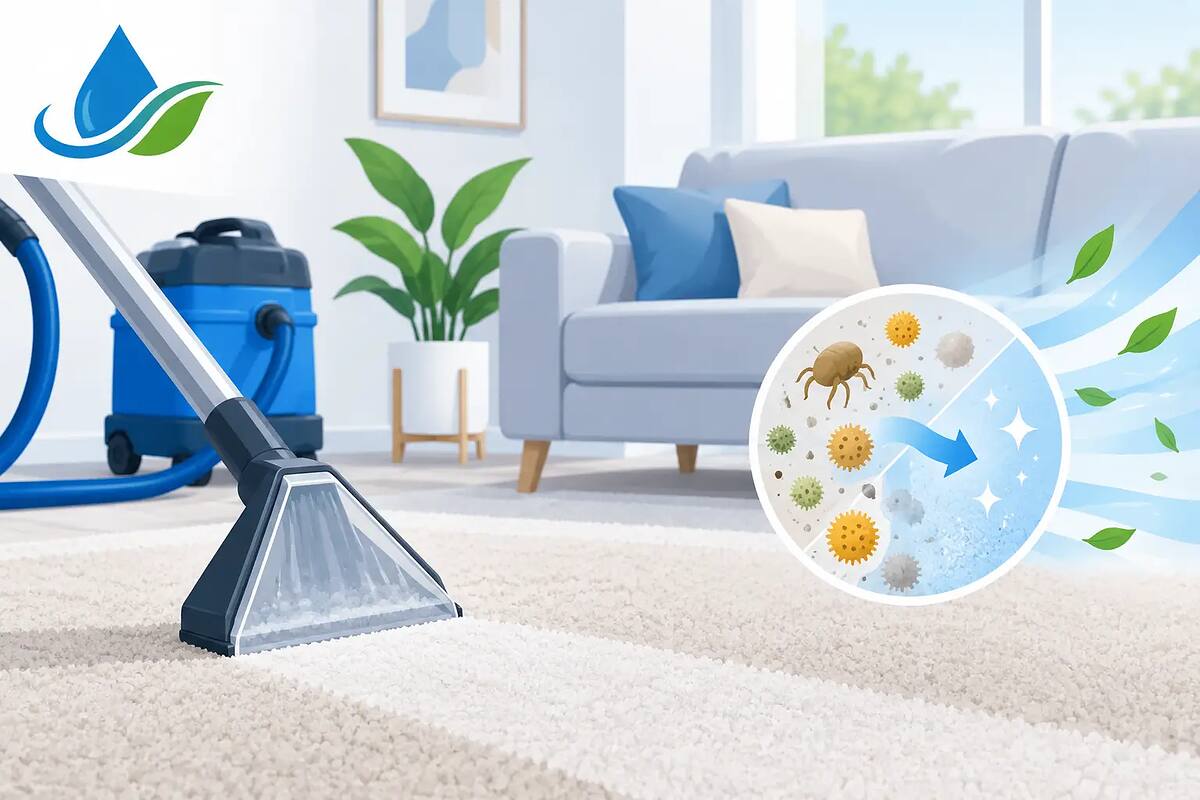
When someone in the house is waking up congested, sneezing on the lounge or dealing with itchy eyes indoors, the carpet is an easy thing to overlook. So, can carpet cleaning reduce allergens? Yes - thorough professional cleaning can remove a significant amount of allergen-carrying dust, pet dander, pollen and other fine debris trapped deep in carpet fibres. It is not a cure for allergies, but it can make a real difference to the indoor environment.
Carpet works like a filter. It catches particles brought in on shoes, through open windows, from pets and from everyday living. That can be useful until the carpet is overloaded. Walking across it, moving furniture or simply creating airflow can disturb settled particles and send them back into the room.
Can carpet cleaning reduce allergens in your home?
Professional carpet cleaning reduces allergens by physically removing the material that carries them. Dust mites themselves are microscopic, but their waste particles can trigger allergy symptoms in sensitive people. Pet dander, pollen, mould spores and general household dust can also settle well below the surface where vacuuming does not always reach.
A proper hot-water extraction service, often called steam cleaning, applies cleaning solution and hot water into the carpet before powerful equipment recovers the moisture and suspended soil. The important part is the extraction. It lifts embedded grime and fine particles out rather than simply freshening the top layer.
The result is a carpet that feels cleaner, looks brighter and holds less of the material that can aggravate allergies. For homes with pets, young children or family members prone to asthma and hay fever, that is a practical benefit, not just a cosmetic one.
That said, no cleaning method can guarantee an allergen-free home. Allergens return through daily use, outdoor air, pets and soft furnishings. Carpet cleaning is one part of a sensible cleaning routine, alongside regular vacuuming, washing bedding and managing moisture in the home.
What allergens collect in carpet?
Carpets pick up more than visible dirt. Fine particles settle between and beneath fibres, particularly in high-traffic areas, around sofas, beside beds and near entry points. A carpet can look reasonably clean while carrying a surprising amount of concealed debris.
Common triggers include dust-mite residue, pet dander, pollen, dust, mould spores and insect fragments. In coastal Northern Beaches homes, open windows and doors are great for airflow, but they can also bring pollen, sand and fine outdoor particles inside. Homes near the beach may also deal with dampness and salt air, which makes timely drying and moisture control especially worthwhile.
Pet odours are a separate issue, although they often travel with dander and tracked-in dirt. If urine has reached the backing or underlay, a standard surface clean may not be enough. It needs targeted treatment to deal with the source rather than masking the smell.
Dust mites are not the same as dust
Dust mites feed on shed skin cells and thrive in warm, humid conditions. The mites are not usually the main concern - the proteins in their waste are what can cause reactions in some people. Removing dust and organic debris from carpet helps reduce the material that supports them.
Professional cleaning can lower the allergen load, but it cannot stop dust mites returning if humidity is high and regular maintenance is ignored. Fast, complete drying matters because a carpet left damp for too long creates a more favourable environment for microbial growth and lingering odours.
Pet dander travels further than pet hair
A quick vacuum will pick up visible hair, but dander is much finer. It can settle into carpet, upholstery, curtains and bedding, then become airborne again as people move through the room. A material-appropriate deep clean of carpets and fabric lounges can be particularly useful where pets are allowed on furniture.
Why ordinary vacuuming is not always enough
Vacuuming remains essential. A quality vacuum with good filtration removes loose surface dust before it gets ground deeper into the pile. For allergy-conscious homes, slow passes in different directions are more effective than a quick run through the middle of the room.
But even a good vacuum has limits. It may not remove oily soil, compacted particles or contamination that has bonded to the fibre. Heavily used carpet around dining tables, hallways and family rooms often needs more than routine vacuuming to get properly clean.
DIY carpet machines can help with a recent spill or light maintenance, but they can create problems when used incorrectly. Over-wetting, unsuitable chemicals and weak extraction can leave residue or moisture behind. That residue attracts fresh soil, while excess moisture can delay drying and contribute to musty smells.
A professional service uses equipment with stronger recovery capability and selects products and techniques for the carpet type, level of soiling and issue being treated. Wool, synthetic carpet, delicate rugs and marine flooring do not all respond the same way. Getting the method right protects the material as well as improving the result.
The cleaning method matters
For most installed carpets, hot-water extraction is a strong option for removing embedded soil and allergens. Pre-treatment helps loosen oily residues and traffic marks, agitation works solution through the pile where needed, and extraction recovers the contaminated water.
The process should be adjusted to the carpet, not applied as a one-size-fits-all service. Wool can be sensitive to high alkalinity and excessive moisture. Some natural fibres, older carpets and rugs need lower-moisture or specialised approaches. A capable cleaner checks the fibre and condition first, including any stains, pet treatment needs and areas of concern.
Drying time also matters. Carpets should not stay wet all day or overnight if it can be avoided. Good airflow, suitable weather conditions and industrial-grade extraction help achieve faster drying times, so rooms can get back to normal sooner.
How often should allergy-prone households clean carpets?
There is no single timetable for every property. A quiet, pet-free household may only need professional carpet cleaning every 12 to 18 months. A busy family home with pets, children, open doors and high foot traffic may benefit from cleaning every 6 to 12 months.
Consider a shorter interval when someone has diagnosed allergies or asthma, when pets spend time indoors, after a renovation, following water damage, or when the carpet has a persistent odour. End-of-lease cleaning is also a good opportunity to deal with built-up soil that ordinary vacuuming has missed.
Between professional cleans, vacuum at least weekly and more often in busy areas. Use a vacuum with a sealed system or HEPA filtration if allergies are a concern. Deal with spills promptly, keep indoor humidity under control, and wash pet bedding and removable cushion covers regularly.
Do not forget upholstery and mattresses
Cleaning the carpet while leaving a heavily used fabric sofa untreated can limit the improvement you notice. Upholstery captures the same mix of dust, dander and pollen, particularly in the places people use every day. Cushions, fabric dining chairs, rugs and mattresses can all contribute to the overall allergen load indoors.
For the best practical result, focus on the spaces where people spend the most time. A lounge room with carpet, a fabric sofa and a pet bed may need a combined approach. Bedrooms also deserve attention, especially where symptoms are worse overnight or first thing in the morning.
When carpet cleaning will not solve the whole problem
If there is visible mould, ongoing water ingress, a leaking air-conditioner, damp underlay or flood damage, cleaning alone will not fix the cause. The moisture issue needs to be identified and addressed first. Otherwise, the problem is likely to return.
Likewise, severely worn or contaminated carpet may be beyond restoration. If backing has broken down, urine has soaked extensively through the underlay, or there is long-term mould contamination, replacement can sometimes be the safer and more cost-effective choice. An honest assessment should make that clear before work begins.
For everyday built-up allergens, though, a well-executed deep clean is a straightforward way to improve how a room looks, smells and feels. Pro Wet & Dry uses material-specific methods and powerful extraction to remove embedded soil without leaving carpets needlessly wet. If your carpet has become part of the problem rather than part of a comfortable home, arranging a professional clean is a sensible place to start.
Bedding Sanitation
Need a hand with this?
Mattress and bedding sanitisation that removes dust, dead skin and allergens. Pro Wet & Dry has been cleaning on the Northern Beaches since 2001.
Or call 1300 132 273