Tips & guides
Leather Maintenance Guide for Sofas and Chairs
This leather maintenance guide explains how to clean, condition and protect sofas, chairs and marine leather without causing costly damage in your home.
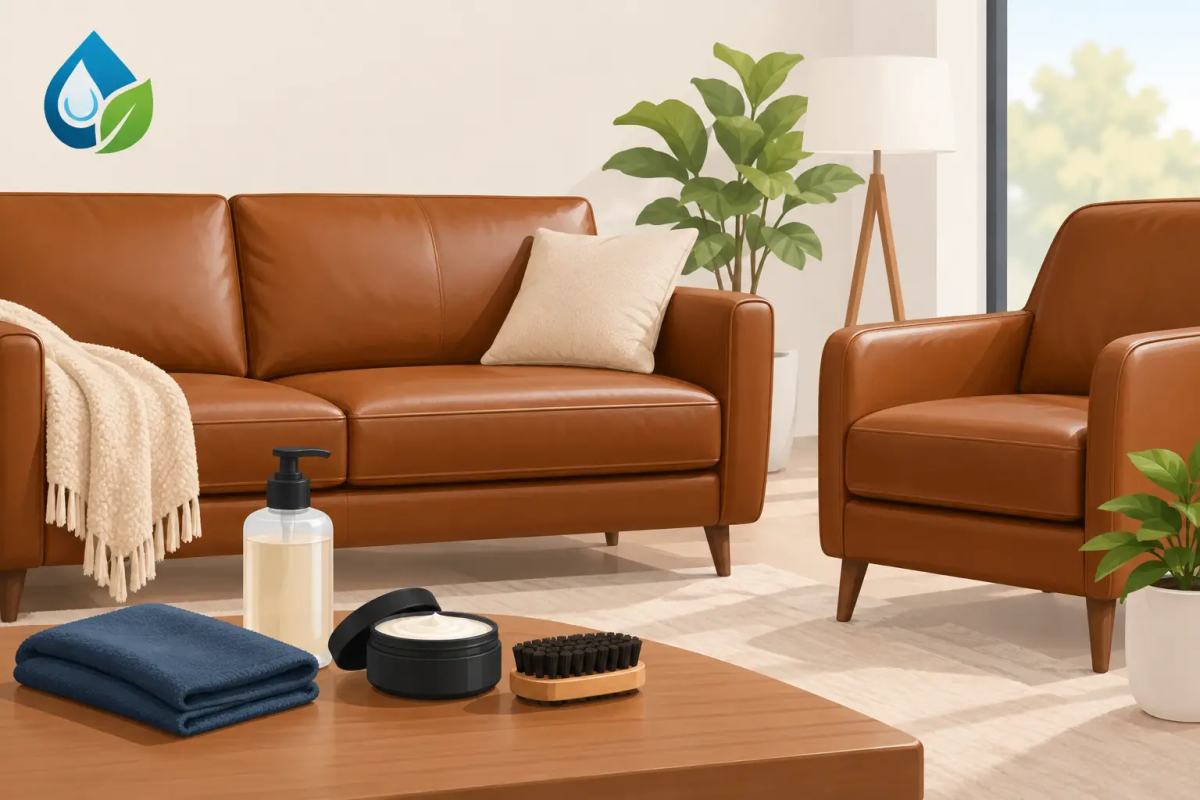
A leather lounge can handle years of family life, pets, salty air and regular use, but it will show neglect faster than most people expect. This leather maintenance guide focuses on the practical work that keeps leather furniture clean, comfortable and looking like new again, without using products that can leave it dry, patchy or permanently marked.
Leather is not one material with one cleaning method. The finish, age, colour and condition all affect what can be safely used. A quick wipe with the wrong cleaner may remove a surface mark, but it can also strip protective coatings or push moisture further into the hide. The goal is simple: remove surface grime early, deal with spills correctly and use professional help before a small problem becomes an expensive repair.
Why regular leather maintenance matters
Body oils, sunscreen, food residue, pet hair and everyday dust settle on leather more than people realise. On a pale sofa, this often appears first on headrests, armrests and seat edges. On darker leather, the problem can be less obvious, but the surface may start to feel sticky, look dull or develop uneven wear.
In Northern Beaches homes, open windows, sand, humidity and sea air can add to the workload. Marine seating needs particular attention because salt residue and strong sun can dry leather out and weaken its finish. Regular care is far easier and more cost-effective than trying to correct deep grime, cracking or colour loss later.
Conditioning also has a place, but it is not a cure-all. Leather that is dirty needs careful cleaning before it is conditioned. Applying conditioner over body oils and grime can seal the contamination in and leave the surface looking uneven.
Start by identifying the leather
Before cleaning anything, check the manufacturer’s care tag or paperwork if it is still available. Most household lounges are finished or protected leather, which has a pigmented surface coating and generally tolerates careful, low-moisture cleaning. This is different from aniline, semi-aniline, nubuck and suede-style leather, which are more absorbent and can mark easily.
A finished leather lounge often has a more consistent colour and a slight protective feel. Aniline leather usually looks more natural, with visible grain variation and a softer touch. Nubuck and suede have a brushed or velvety texture. These more absorbent leathers should not be treated like a standard vinyl-look sofa.
If you are unsure, avoid experimenting on a visible cushion. A professional leather cleaner can assess the finish and select a material-specific method. This matters especially for expensive furniture, vintage pieces, commercial seating and marine upholstery, where replacement or restoration costs can be substantial.
The simple weekly routine
A regular light clean stops grit and oils becoming embedded. Vacuum the lounge weekly using a soft upholstery brush, paying close attention to seams, creases, under cushions and around buttons. Grit acts like fine sandpaper over time, particularly where people slide in and out of a seat.
Follow with a dry, soft microfibre cloth to remove loose dust. If the leather needs a wipe, use a clean cloth only slightly dampened with water, not soaked. Wring it out thoroughly and wipe gently in broad sections. Then use a separate dry cloth to remove remaining moisture.
Do not scrub. Hard rubbing can create shiny patches on matte finishes and may wear down colour on older leather. It is also worth keeping leather furniture away from direct afternoon sun where possible. Blinds, curtains or a simple change in furniture position can slow fading and drying.
How to handle spills without making them worse
Speed matters with spills, but panic cleaning is where damage often occurs. Blot liquid spills immediately with a clean white cloth or paper towel. Press lightly and lift the moisture away. Do not rub across the leather, as this can spread the stain and force it into seams or absorbent areas.
For a fresh food or drink mark on protected leather, use a barely damp cloth after blotting, working from the outside edge towards the centre. Dry the area with another clean cloth and allow it to air dry naturally. Keep heaters, hair dryers and direct sunlight away while it dries. Rapid heat can stiffen leather and contribute to cracking.
Oil-based spills, ink, makeup, dye transfer from clothing and pet accidents are different. Home remedies are risky here. Alcohol, acetone, methylated spirits, nail polish remover and strong degreasers can remove colour, dissolve protective finishes or leave a pale ring that is harder to repair than the original mark.
If a stain remains after gentle blotting, stop. Take note of what caused it and seek advice from a specialist. The right treatment depends on the contaminant and the leather finish, not just the colour of the mark.
Conditioning leather the right way
Conditioner helps maintain softness and can reduce the dry, tired appearance that develops with age. Most well-used household leather lounges benefit from conditioning roughly every six to twelve months, but the right interval depends on the leather type, room conditions and how heavily the furniture is used.
Use only a conditioner suitable for your specific leather finish. Apply a small amount to a soft cloth, test it in a hidden area and allow it to dry before treating the rest of the piece. If there is no adverse change, apply sparingly in thin, even layers. More product is not better. Over-conditioning can leave a greasy feel, attract dust and alter the surface sheen.
Do not condition dirty leather. Clean first, allow it to dry fully, then condition if appropriate. For absorbent aniline, nubuck or suede-type leather, even a standard conditioner may darken or mark the surface. These materials need specialised products and a more cautious approach.
What not to use on leather furniture
Many common household products are too harsh for leather, even if they seem to work at first. Avoid dishwashing liquid, disinfectant sprays, bleach, eucalyptus oil, baby wipes, furniture polish, saddle soap unless the manufacturer specifically recommends it, and general-purpose cleaners.
Baby wipes are a frequent culprit. They can contain lotions, alcohols or cleaning agents that leave residue and gradually affect the finish. Similarly, silicone-heavy polishes may create an artificial shine that attracts dust and makes future professional cleaning more difficult.
Steam cleaning is another area where it depends. Steam can be effective on many fabrics, but direct high heat and moisture are not suitable for all leather surfaces. Leather cleaning should use controlled moisture, purpose-made solutions and proper drying techniques rather than a one-size-fits-all process.
Signs your leather needs professional attention
A professional clean is worthwhile when grime is visible around headrests and arms, the lounge feels sticky, odours persist, or lighter sections look grey or yellowed. It is also the sensible option after a major spill, pet urine incident, mould concern, flood exposure or dye transfer from jeans and cushions.
Cracking, peeling and colour loss need an honest assessment. Cleaning can remove contamination and improve the appearance of neglected leather, but it cannot always reverse physical damage to a worn coating. A good cleaner will explain what can be restored, what can be stabilised and when repair or recolouring may be the better option.
For commercial waiting rooms, hospitality venues and marine interiors, scheduled cleaning helps keep seating presentable without waiting for a visible problem. It also reduces disruption, as the work can be planned around operating hours or vessel access.
A practical maintenance plan for busy homes
For most homes, vacuuming and dry dusting weekly, responding promptly to spills and arranging periodic professional cleaning is enough to protect a quality leather lounge. Families with pets, young children or heavy daily use may need more frequent attention, particularly on high-contact areas.
Keep the process simple. Use clean cloths, minimal moisture, leather-safe products only and patience. If you cannot identify the leather type or the stain is not lifting easily, do not keep adding products. That is the point where careful professional treatment is usually the cheaper choice.
A well-maintained leather lounge should feel clean when you sit down, not sticky, dry or heavily perfumed with cleaning products. Give it steady, sensible care and it will remain a comfortable, hard-wearing part of your home for years to come.
Leather Care
Need a hand with this?
Specialised cleaning and conditioning to restore leather lounges and keep them supple. Pro Wet & Dry has been cleaning on the Northern Beaches since 2001.
Or call 1300 132 273