Tips & guides
Best Ways to Prevent Carpet Mould at Home
Learn the best ways to prevent carpet mould, control dampness and act fast after spills or leaks to keep your home clean, dry and mould-free year-round.
A carpet can look fine on the surface while holding moisture deep in the backing, underlay and subfloor. That is why the best ways to prevent carpet mould are less about masking a musty smell and more about keeping carpets dry, improving airflow and dealing with water quickly. In Northern Beaches homes, humid weather, coastal air, wet swimmers, pets and small plumbing leaks can all add up.
Mould needs moisture, a food source and time. Carpet fibres, dust, pet hair and soil provide plenty for it to feed on. Remove the moisture early and you stop the problem before it affects the carpet, underlay, indoor air and the room itself.
Keep indoor moisture under control
Condensation is often the quiet cause of carpet mould. It can build up in bedrooms with closed windows, rooms with poor ventilation, ground-floor spaces and areas near bathrooms or laundries. If windows are wet in the morning or a room regularly feels clammy, the carpet may be absorbing more moisture than you realise.
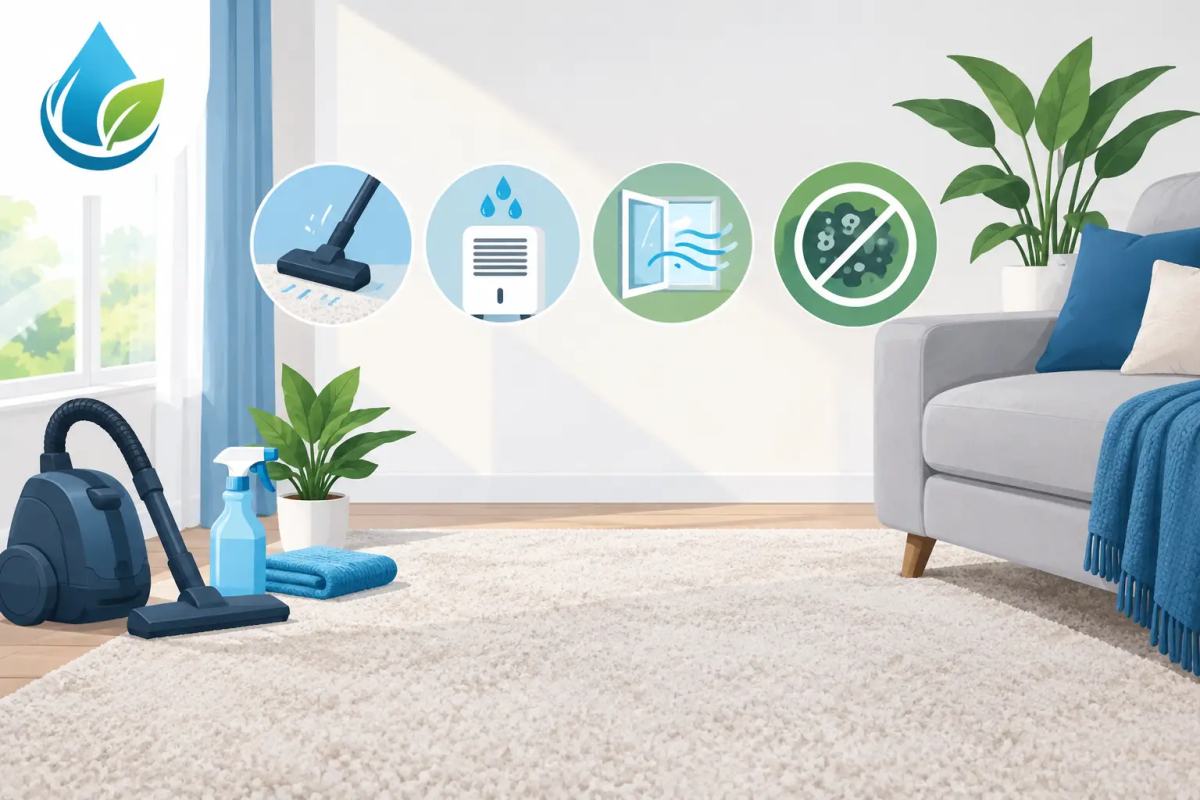
Open windows when the weather allows, use exhaust fans during showers and cooking, and avoid drying washing indoors on damp days. A dehumidifier can make a real difference in enclosed rooms, especially during long wet spells. Air conditioning may also help reduce humidity, provided it is correctly maintained and draining as it should.
Do not push heavy furniture hard against external walls if that wall tends to feel cold or damp. Leaving a small gap helps air move behind lounges, beds and cabinets, where mould can otherwise take hold unnoticed.
Dry spills properly, not just the surface
A tipped drink, overflowing pet bowl or wet shoes at the door might seem minor. The issue is how much liquid reaches the carpet backing and underlay. A quick wipe can leave moisture below the fibres, where it dries slowly and can develop an odour.
Blot fresh spills with clean, absorbent towels rather than rubbing them further into the pile. Apply firm pressure, replace the towel as it becomes wet, then use airflow to finish the job. A pedestal fan pointed across the affected area is useful because moving air carries moisture away. If a large area is wet, a wet-and-dry vacuum can remove far more water than towels alone.
Avoid soaking the spot with supermarket carpet shampoo in an effort to clean it. Too much solution can worsen the moisture problem and leave a sticky residue that attracts soil. Use only the amount of cleaning product needed, and make sure the area is dry before placing furniture or rugs back over it.
Act immediately after leaks and flooding
Water damage is different from an ordinary spill. A burst hose, roof leak, overflowing appliance or stormwater entry can saturate the underlay and travel beneath the carpet well beyond the visibly wet patch. Waiting for it to air dry is risky, particularly in humid conditions.
The first priority is to stop the water source where it is safe to do so. Move furniture off the wet area, remove loose items and start extracting water as soon as possible. Lift the carpet edge only if you know it can be done without causing further damage. In many cases, the underlay needs separate drying or replacement because it holds water like a sponge.
Professional flood recovery equipment removes water more effectively than household vacuums and supports controlled drying with air movers and dehumidification. This matters because drying the top of the carpet is not the same as drying the backing, underlay and floor beneath it. Fast action gives a wet carpet the best chance of being restored rather than replaced.
Use entry mats and manage wet traffic
Prevention starts at the door. Quality entry mats reduce the amount of rainwater, sand and grime brought onto carpeted areas. Use a mat outside to catch the worst of the moisture and another inside where practical. Wash and dry them regularly, as a saturated mat stops doing its job.
For busy family homes, set a simple routine after rain, beach trips or sport: shoes off, towels for dogs, and wet gear kept on tiled or hard flooring until dry. This is especially useful around hallways and living areas where repeated damp footprints create a larger problem than one obvious spill.
In commercial premises, check entrances throughout wet weather. A small patch of damp carpet near the front door can be walked through all day, spreading moisture and dirt further into the building. Rotating dry mats and arranging prompt extraction when needed protects both presentation and hygiene.
Clean carpets without over-wetting them
Carpets need regular cleaning to remove the fine soil and organic material mould can feed on. But carpet cleaning should always match the fibre type, construction and condition of the carpet. Over-wetting, poor extraction or using the wrong cleaning method can leave a carpet damp for too long.
For routine upkeep, vacuum thoroughly at least once a week and more often in high-traffic areas or homes with pets. This removes dry debris before it works down into the pile. Deal with spots early, but avoid repeated heavy DIY treatments on the same area. Persistent stains and pet odours often need a treatment that reaches below the visible surface without leaving the carpet saturated.
Professional steam cleaning, when performed with the right equipment and strong extraction, can clean deeply while keeping drying times practical. Drying time still depends on carpet thickness, airflow, weather and how soiled the carpet is. Opening the room to airflow and keeping pets and furniture off the carpet until it is dry will help protect the result.
Check the hidden areas regularly
Mould often starts where people do not look: under beds, behind sofas, inside wardrobes, around skirting boards and beneath area rugs. These locations have less airflow and may conceal a slow leak or condensation issue.
Every few months, pull back a corner of movable furniture and check for musty smells, discolouration, dampness or a carpet backing that feels cold and clammy. Inspect wardrobes along external walls, especially if they are packed tightly. If you use rugs on carpet, lift them occasionally to make sure no moisture is trapped underneath.
A musty odour should not be covered with fragrance. It is a useful warning that something may still be damp. Finding the source is the key step, whether it is a leaking pipe, wet subfloor, air-conditioning drainage issue, poor ventilation or a past water event that was never fully dried.
Know when carpet mould needs professional help
Small, recent surface spots may be manageable after the moisture source has been fixed, but widespread mould, recurring odours or carpet affected by dirty floodwater require a more careful response. Disturbing mould can spread spores, and cleaning the visible fibres alone does not solve contamination in the underlay or subfloor.
Be particularly cautious if anyone in the property has asthma, allergies or respiratory sensitivities. Avoid dry brushing or aggressively vacuuming a suspected mouldy area, as this may spread particles through the room. A professional assessment can determine whether the carpet can be cleaned and dried safely or whether sections of underlay and carpet need removal.
For homes, rentals and businesses across the Northern Beaches, Pro Wet & Dry can extract water, treat affected carpet and support rapid drying after leaks, spills and flood events. The right response depends on the water source, how long the carpet has been wet and what is happening underneath it.
A dry, well-maintained carpet should not smell like anything at all. If a room feels damp or the odour returns after cleaning, treat that as a reason to investigate early. Acting before moisture settles into the underlay is usually the simplest, cleanest and least disruptive fix.
Flood Recovery
Need a hand with this?
Industrial water extraction and drying after floods, leaks and burst pipes. Pro Wet & Dry has been cleaning on the Northern Beaches since 2001.
Or call 1300 132 273