Tips & guides
How to Remove Sunscreen Stains From Upholstery
Learn how to remove sunscreen stains upholstery safely, what not to use, and when specialist cleaning is the best option for fabric sofas and chairs too.
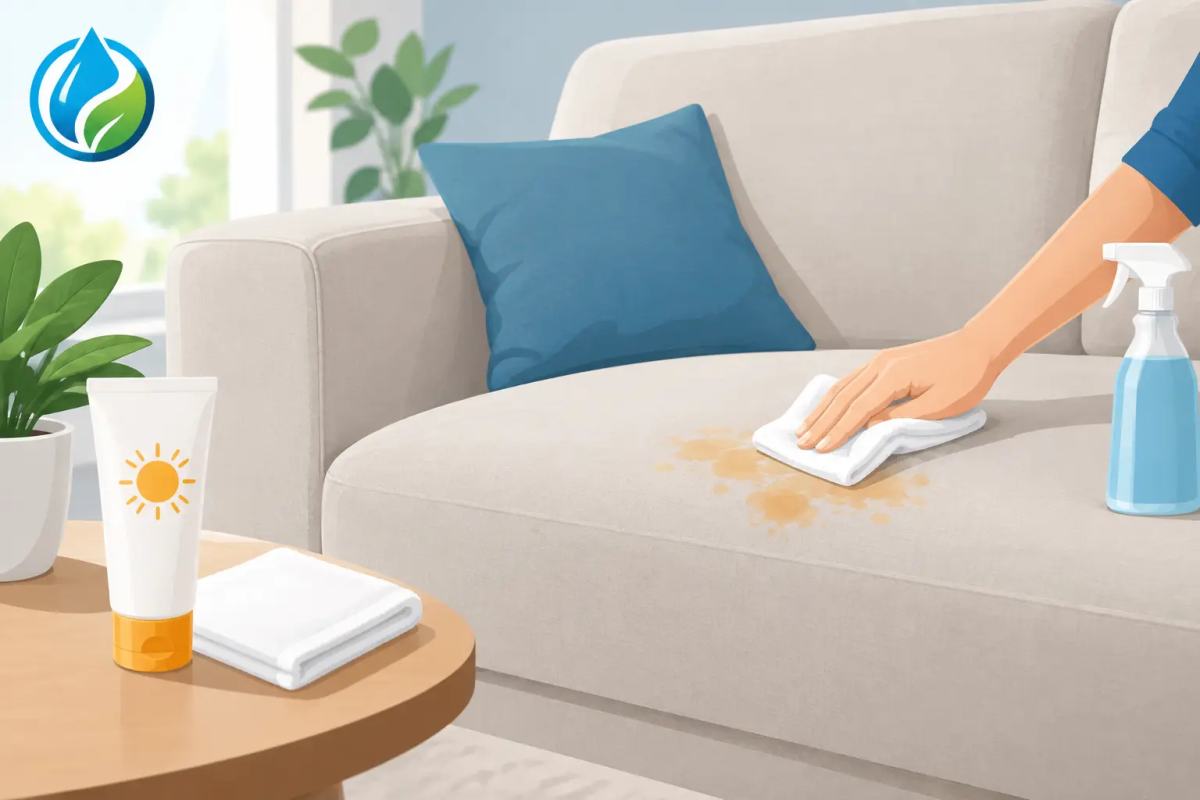
A sunscreen mark on the lounge often looks harmless at first: a slightly darker armrest, a greasy patch where someone sat after the beach, or a pale yellow ring that appears once the fabric dries. But sunscreen is designed to stay on skin through heat, water and sweat. That is exactly why it can be difficult to remove sunscreen stains from upholstery without spreading the oily residue or setting the mark deeper into the fabric.
The right approach depends on the upholstery material, the type of sunscreen and how long the stain has been there. Acting early gives you the best chance of a clean result, but a rushed scrub with the wrong product can leave water marks, faded fabric or a larger greasy patch.
Why sunscreen stains are stubborn
Most sunscreens contain a combination of oils, moisturising agents, UV filters and pigments. These ingredients can transfer from bare skin, towels and swimwear to fabric lounges, dining chairs, car seats and outdoor cushions. Oil-based ingredients attract dirt, so a fresh mark can become darker over time even when it initially looks minor.
Some mineral sunscreens also contain zinc oxide or titanium dioxide. These can leave a chalky white residue, while chemical sunscreens may produce a yellow or orange discolouration as they react with body oils, heat or cleaning products. On light-coloured fabrics, that yellowing is often what customers notice most.
Fabric type matters as well. Synthetic microfibre and many durable woven upholstery fabrics can usually tolerate careful spot treatment. Linen, cotton blends, velvet, wool, silk and delicate designer fabrics need more caution. Leather requires a completely different process, as excess moisture and household degreasers can strip protective finishes or leave dry, dull areas.
Start by checking the care label
Before using anything on a sofa or chair, locate the manufacturer’s cleaning code. It is usually found under a seat cushion, on the frame or on a tag underneath the furniture.
A code marked W generally permits water-based cleaning. S means solvent-based products only, while WS can tolerate either method. X means the item should only be vacuumed or professionally cleaned. These codes are helpful, but they do not guarantee that every cleaning product is safe. Dyes, backing materials and previous treatments can all react differently.
If the furniture is expensive, sentimental, lightly coloured or made from a delicate natural fibre, test any product first in a hidden area. Apply a small amount, blot it dry and allow it to fully dry before treating the visible stain. Check for colour transfer, texture changes or a tidemark.
How to treat a fresh sunscreen stain
The first job is to lift as much product as possible without rubbing it through the fabric. Use a clean white cloth or plain paper towel to blot the area gently. Work from the outside of the stain towards the centre so it does not spread.
Avoid scrubbing. Friction pushes sunscreen deeper into the fibres and can roughen the surface of fabrics such as velvet, chenille and microfibre. It can also make a small spill look much larger.
For water-safe upholstery, lightly dampen a clean white cloth with cool water and blot again. Do not soak the cushion. Too much water can drive oils down into the foam, cause a brown water ring and increase drying time. A small amount of upholstery-safe, pH-neutral detergent can help break down surface residue, but use it sparingly and follow the label directions exactly.
Blot with a second clean cloth dampened only with water to remove detergent residue, then press a dry towel over the area to draw out moisture. Leave cushions uncovered in a well-ventilated room to dry naturally. Fans can help, but avoid heaters, hair dryers and direct sunlight. Heat may set the stain or shrink and distort certain fabrics.
Treating older yellow or greasy marks
Once sunscreen has dried or been sat on repeatedly, it is usually no longer a simple surface spill. The oily ingredients may have bonded with dust and body oils, particularly on headrests, armrests and favourite spots on the lounge.
A gentle upholstery-specific spot cleaner can sometimes improve an older stain, provided the care label permits it. Apply it to a cloth rather than directly onto the furniture, work in small sections and blot away the loosened soil. Do not keep adding product in the hope of a faster result. Over-wetting creates its own problem and leaves behind residues that attract more dirt.
If the stain remains after one careful attempt, stop there. Repeated DIY cleaning is a common reason a treatable sunscreen stain turns into a permanent-looking patch. The fabric may now have uneven colour, detergent residue or moisture trapped in the cushion filling.
What not to use on upholstery
Sunscreen marks can be frustrating, but stronger is not always better. Many common household fixes are too harsh for furnishing fabrics or too wet for the cushion underneath.
Avoid using bleach, strong all-purpose sprays, dishwashing liquid in heavy concentrations, laundry stain removers, acetone, methylated spirits or undiluted vinegar. These products can alter colour, damage fibres, break down fabric protection and leave visible rings. They are particularly risky on wool, velvet, linen, leather and fabrics with a stain-resistant coating.
Powders such as bicarb soda are sometimes suggested for oily stains. They may absorb some surface oil, but they can be difficult to remove from textured upholstery and are not a complete solution for sunscreen residue. If particles remain in the weave, they can leave the fabric feeling stiff or gritty.
Steam is also not automatically the answer. Professional hot water extraction uses controlled temperature, cleaning agents, agitation and powerful recovery. Holding a domestic steam cleaner over an oily stain can add heat and moisture without properly extracting the residue. On some materials, that can make the stain more difficult to correct.
When professional upholstery cleaning makes sense
Professional cleaning is the sensible option when sunscreen has affected a large area, the fabric is delicate, the stain has yellowed, or the lounge carries a mix of sunscreen, sweat, body oils and general grime. These marks often need more than a surface wipe.
A trained technician assesses the fibre type, dye stability, cleaning code and condition of the fabric before selecting a method. Depending on the material, treatment may involve targeted pre-treatment for oily residue, low-moisture cleaning, controlled hot water extraction or specialist fabric cleaning products. The aim is to lift contamination while recovering it from the fabric, rather than simply moving it around.
This matters for cushions as much as the visible cover. When cleaning is too wet or poorly extracted, moisture can remain in the foam and backing. Proper recovery equipment helps reduce drying time and leaves the furniture ready to use sooner.
For homes, holiday rentals, offices, waiting areas and marine upholstery around the Northern Beaches, it is also worth addressing sunscreen stains before they become part of the overall wear pattern. A clean lounge presents better, feels fresher and lasts longer than furniture repeatedly treated with random supermarket products.
Prevent sunscreen transfer before it starts
Prevention is easier than stain removal, especially through summer. Give sunscreen a few minutes to absorb before sitting on fabric furniture or getting into the car. Use washable throws on the lounge after beach days, and keep a designated towel over outdoor cushions where possible.
Wiping down arms and legs after applying sunscreen also helps. Children tend to transfer product to armrests and cushions without noticing, so a quick clean-up routine after swimming can save a lot of effort later. For light-coloured or heavily used upholstery, regular professional maintenance helps remove the gradual build-up of body oils and airborne soil before a single sunscreen mark has a chance to stand out.
If you have already tried a gentle blotting method and the stain is still visible, do not keep escalating the chemicals. A material-specific clean can often achieve a better result than another round of DIY treatment, while protecting the furniture you paid good money for.
Stain Removal
Need a hand with this?
Red wine, coffee, food, ink and more. Specialised products and equipment for tough stains. Pro Wet & Dry has been cleaning on the Northern Beaches since 2001.
Or call 1300 132 273