Tips & guides
Emergency Stain Treatment for Carpets and Lounges
Emergency stain treatment advice for carpets, lounges and rugs: act fast, avoid common mistakes and know when to call a professional early before stains set.
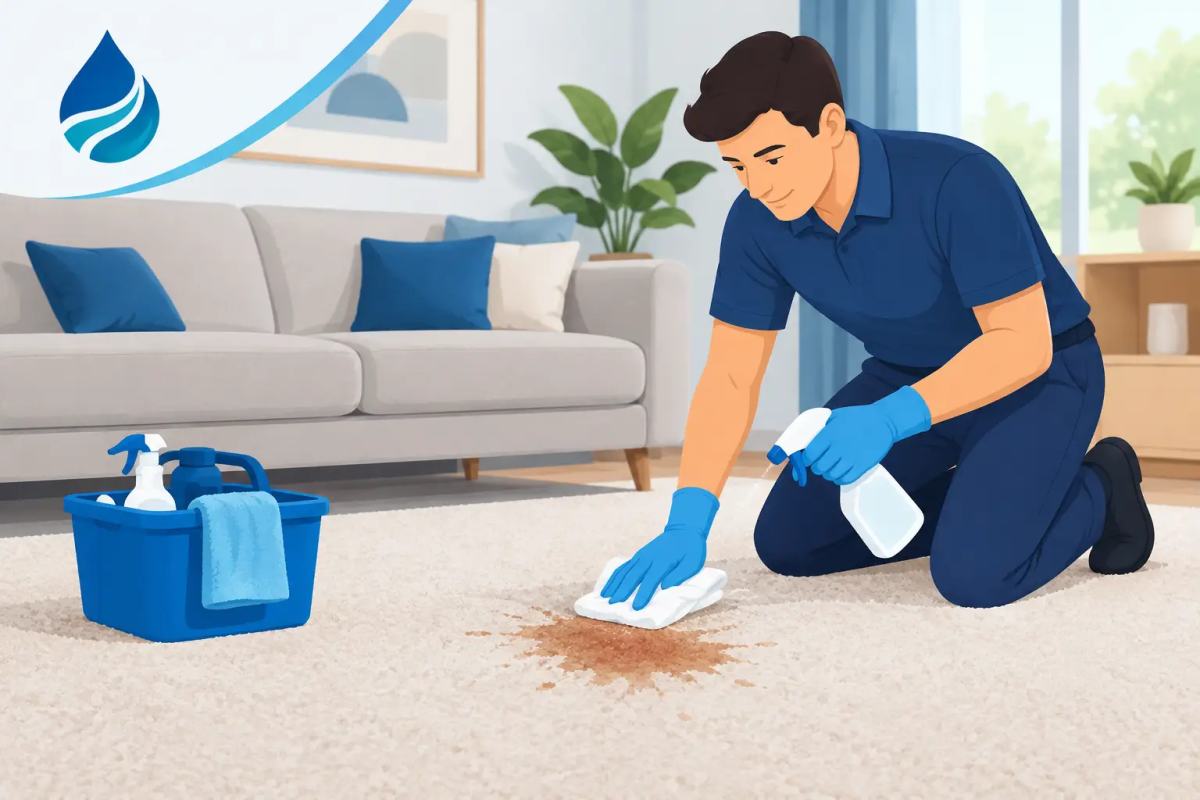
A dropped glass of red wine, muddy paw prints across the lounge, or a child’s juice spill can go from minor mishap to stubborn stain in minutes. The right emergency stain treatment is not about throwing every product in the cupboard at the problem. It is about acting promptly, using the least aggressive method first, and knowing when to stop before a stain becomes permanent damage.
The first 10 minutes matter most
Spills are easiest to remove before they dry, soak through backing materials or react with heat and household chemicals. Start by removing any solids carefully with a spoon or blunt edge. Do not scrape hard, as this can push food, mud or other debris further into carpet fibres or fabric.
Then blot the affected area with a clean white towel or absorbent paper. Press firmly and lift straight up. Keep moving to a dry section of the towel as it absorbs the spill. Rubbing is the mistake that causes the most trouble: it spreads the stain, roughens carpet fibres and can force colour deeper into the pile or upholstery foam.
If the spill is still wet, work from the outside towards the centre. This helps contain it rather than creating a larger ring around the original mark. Take a quick photo before treating the area if the stain is significant, especially in a rental property, commercial space or on a valuable furnishing.
Emergency stain treatment starts with identifying the spill
Not all stains respond to the same treatment. Water-based spills such as cordial, soft drink, tea and many fresh food stains often respond well to careful blotting and a small amount of cool water. Oily substances such as salad dressing, make-up, sunscreen and greasy food need a different approach. Protein-based stains, including milk, blood, pet accidents and vomit, can set when exposed to heat.
That is why hot water is rarely the right first move. It may permanently set protein stains, affect dyes and shrink or distort delicate natural fibres. Cool water is the safer option for initial blotting, provided the fabric is colourfast and you do not over-wet the area.
The material matters just as much as the stain. Synthetic carpet is generally more forgiving than wool, but that does not make it immune to colour loss or residue. Wool, silk, viscose, cotton blends, leather and loose-weave upholstery all need more caution. A treatment that works on a polypropylene rug can cause lasting damage to a wool lounge or a leather chair.
For fresh drink and food spills
After blotting, lightly dampen a clean white cloth with cool water and dab the stained area. Avoid pouring water directly onto carpet or upholstery. Too much moisture can soak into underlay or cushioning, create water marks and leave an odour issue behind.
Continue alternating between a lightly damp cloth and a dry towel. The aim is to lift the spill out gradually, not flood it. If colour continues transferring onto the towel, keep blotting patiently. Once no more colour lifts, place a dry towel over the area and apply light pressure to draw out remaining moisture.
For mud and tracked-in dirt
Let mud dry completely before trying to remove it. Wet mud smears and works deeper into fibres. Once dry, vacuum thoroughly, including from several directions, before using any moisture. If a mark remains, lightly blot with cool water rather than scrubbing.
This approach also applies to many sandy spills in homes near the beach. Removing dry grit first protects carpet fibres from unnecessary abrasion.
For pet urine, vomit and other odours
Blot up as much moisture as possible straight away. Surface cleaning alone is often not enough, because urine can travel through carpet backing and into the underlay. The visible mark may disappear while the source of the odour remains underneath.
Avoid masking the smell with perfume sprays. They do not remove the contamination and can make professional treatment more difficult. Persistent pet odours usually need a targeted treatment that reaches the affected layers, followed by proper extraction and drying.
What not to do when a stain appears
Some quick fixes create more damage than the original spill. Bleach is a major risk on coloured carpet, fabric and natural fibres. It can strip dye instantly, leaving a pale patch that cannot be cleaned away. Strong supermarket spotters can also leave residue behind, attracting more dirt after the area dries.
Do not use dishwashing liquid freely, even though it is often recommended for stains. A tiny amount may be appropriate in limited circumstances, but too much leaves a sticky residue in the fibres. That residue can make the treated patch look clean for a day or two, then appear darker as it collects soil.
Avoid steam, hair dryers and direct heat on unknown stains. Heat can set the stain and may damage upholstery adhesives, shrink fabric or affect the texture of carpet pile. Do not saturate the area with water, and do not use coloured towels that may transfer dye onto damp fabric.
A good rule is simple: if you do not know the fibre type or the product is not clearly suitable for it, stop after blotting and seek professional advice.
When household treatment is not enough
There is a point where more DIY effort delivers less chance of a good result. Call for professional stain removal when the stain is old, large, oily, strongly coloured or has already been treated unsuccessfully. Wine, coffee, ink, paint, make-up, nail polish, rust, bleach damage and pet urine are all situations where the wrong product can make restoration harder.
Professional cleaning is also the sensible choice for wool carpet, expensive rugs, upholstered dining chairs, fabric lounges, leather furnishings and commercial carpet. These materials often require specialised chemistry, controlled agitation and extraction equipment that removes both the contaminant and cleaning solution.
Fast extraction matters. If moisture is left beneath the surface, it can lead to lingering odours, browning marks, mould risk or damage to flooring below. Proper equipment removes far more moisture than towels or a domestic wet vacuum, helping carpets and upholstery dry faster and return to use sooner.
For tenants, landlords and property managers, it is worth reporting major spills early. A prompt professional assessment can help protect the condition of the property and provide a clear record that the issue was addressed properly.
Material-specific care protects valuable furnishings
Carpet, upholstery and leather should never be treated as one category. Carpet cleaning may involve hot water extraction where suitable, while delicate upholstery can need low-moisture methods or carefully selected solutions. Leather requires pH-appropriate cleaning and conditioning, not fabric spotter or water saturation.
Marine interiors need particular care as well. Salt air, humidity and compact cushions can make odours and moisture problems harder to manage. Cleaning needs to account for the material, the ventilation available and the need to avoid excessive drying times in enclosed spaces.
This is where a trained cleaner can make a visible difference. The goal is not simply to fade the mark. It is to remove as much of the stain and residue as the material allows, protect the fibre or finish, and leave the area clean and usable without creating a new problem.
After the stain has been treated
Keep foot traffic, pets and furniture away from the area until it is fully dry. A damp carpet can attract soil quickly, while sitting on a damp lounge cushion can push moisture and any remaining residue further into the fabric.
Check the area again once dry. Some stains, particularly coffee, urine and heavily soiled spills, can wick back to the surface as moisture evaporates. If the mark or smell returns, avoid repeating strong spot treatments. It is a sign that contamination may remain below the surface.
For homes and businesses across the Northern Beaches, Pro Wet & Dry can assess difficult stains, embedded odours and water-affected furnishings using methods suited to the material involved. Acting early gives any stain the best chance of coming out, but careful treatment gives your carpet or lounge the best chance of staying in good condition.
Odour Removal
Need a hand with this?
Pet urine, vomit and lingering smells treated at the source, not masked. Pro Wet & Dry has been cleaning on the Northern Beaches since 2001.
Or call 1300 132 273