Tips & guides
Carpet Deodorising vs Enzyme Treatment Compared
Carpet deodorising vs enzyme treatment: learn which option tackles everyday smells, pet urine and lingering odours for a fresher, cleaner carpet at home.
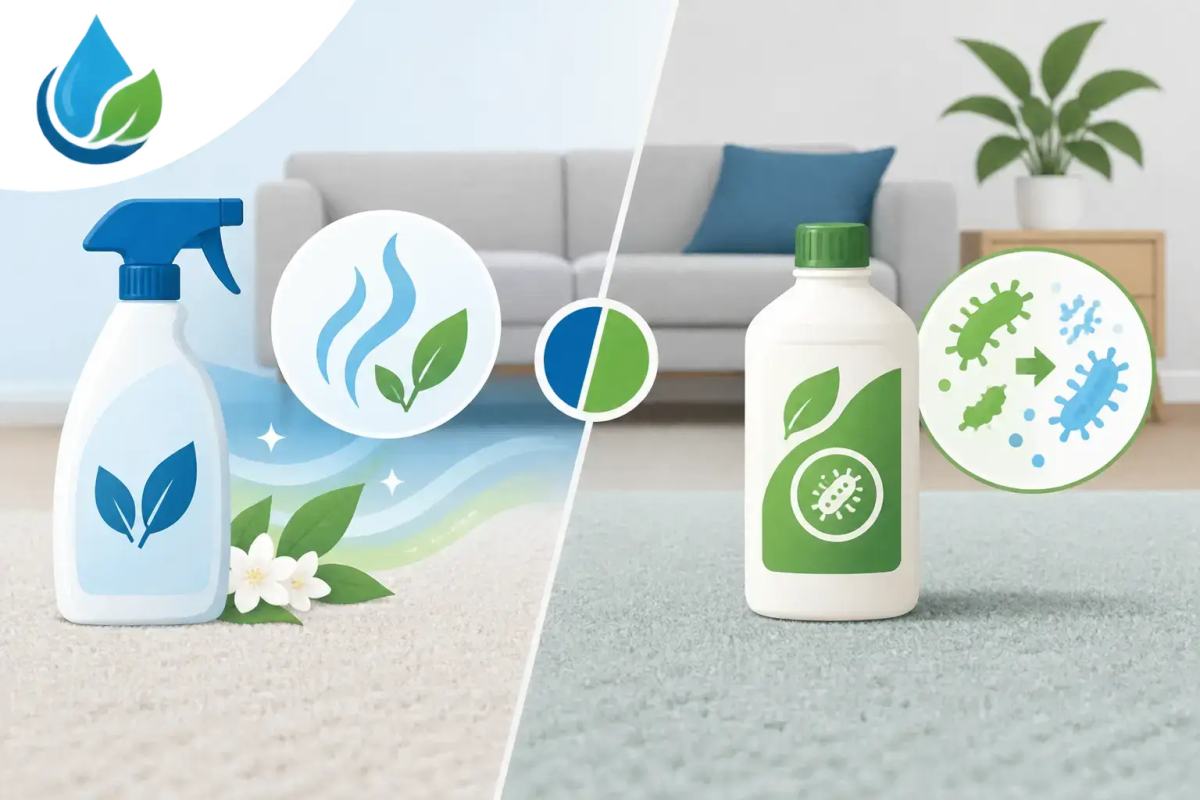
A carpet can look clean and still hold an unpleasant smell. That is where carpet deodorising vs enzyme treatment becomes a practical decision, particularly when pets, spills, dampness or heavy foot traffic are involved. The right option depends on what is causing the odour, not just how strong it seems on the day.
A deodoriser can freshen a carpet quickly and improve the overall result after professional cleaning. An enzyme treatment goes further when there is organic residue, such as pet urine, vomit, food, milk or other biological spills, trapped in the carpet fibres or beneath them. Using the wrong approach may leave the room smelling better temporarily, only for the odour to return when humidity rises or the carpet gets damp.
Carpet deodorising vs enzyme treatment: the key difference
Carpet deodorising is designed to neutralise or reduce general odours. It is often used after steam cleaning to leave carpets smelling fresh and to deal with everyday smells caused by cooking, shoes, dust, pets and normal household use. A quality professional deodoriser is chosen for the carpet type and the issue at hand, rather than simply covering the smell with a strong fragrance.
Enzyme treatment is more targeted. Enzyme-based products are formulated to break down organic matter that bacteria feed on. When pet urine or another biological spill dries in carpet, the residue can remain even after the visible mark has faded. That residue is often the source of a persistent, sour or ammonia-like smell.
Put simply, deodorising treats the smell. Enzyme treatment is used to address the residue that is creating the smell. In many pet odour jobs, both are useful, but they do different jobs.
When carpet deodorising is the better option
Deodorising is usually suitable where the carpet has a broad, low-level odour rather than one obvious contaminated area. A lounge room that smells stale after winter, a rental property between tenants, or a busy office carpet with everyday use may benefit from a professional clean followed by deodorising.
It can also be a good finishing step after steam cleaning. Hot water extraction removes embedded soil, dust and the grime that holds odours in place. Once the carpet is properly cleaned and moisture is recovered with professional equipment, a suitable deodorising treatment can leave the space fresh without making the carpet overly wet.
Deodorising is not a substitute for stain removal or contamination treatment. If a dog has repeatedly urinated in one corner of the room, a deodoriser alone is unlikely to provide a lasting result. The smell may disappear briefly, but the source remains below the surface.
When an enzyme treatment is worth it
Enzyme treatment is the more appropriate choice when an odour is concentrated, recurring or clearly linked to an organic spill. Pet urine is the most common example, especially where a pet has returned to the same spot more than once. Other situations include vomit, faeces, milk spills, food residue and accidents on rugs, upholstery or mattresses.
The treatment needs to reach the depth of the contamination. With urine, that may mean treating the carpet backing, underlay and sometimes the subfloor, not just the top fibres. This is why spraying a supermarket product over the surface often gives disappointing results. It may freshen the pile, while the urine salts and bacteria remain underneath.
Enzyme products also need the right conditions to work. They require enough contact time and moisture to break down the organic material. Applying too little product, drying it too fast or extracting it immediately can limit the result. A professional assessment helps determine whether a localised treatment is enough or whether the affected section needs deeper flushing and extraction.
Why pet odours can come back after cleaning
Pet urine is not always obvious once it dries. It can spread wider through the carpet backing and underlay than the visible spot suggests. In some cases, pets have used the same area repeatedly, creating layers of contamination that have built up over time.
Humidity can reactivate urine odours. On a warm or wet day, trapped moisture can make the smell more noticeable, even if the carpet seemed fine earlier in the week. This is one reason customers often report that an odour returns after a basic clean or once a room has been closed up.
The age of the stain matters too. Fresh accidents are generally easier to treat because the contamination has had less time to move through the carpet system. Older odours can still be improved substantially, but complete removal may depend on how deeply the contamination has travelled and whether the underlay or subfloor has been affected.
What a proper odour treatment should involve
The first step is identifying the likely source. A musty smell after a water leak needs a different approach from pet urine. Likewise, odours in a wool carpet, synthetic carpet, fabric lounge or marine upholstery need material-specific methods to avoid damage and get the best result.
For general odours, professional steam cleaning may be the main service, with deodorising applied as part of the finish. For biological contamination, the affected area needs targeted enzyme treatment before or alongside extraction. The aim is to remove the residue and recover as much moisture as possible, rather than simply make the room smell strongly perfumed.
In severe cases, a technician may recommend lifting a section of carpet to inspect the underlay or subfloor. That is not required for every pet accident, but it can be necessary where odours are strong, widespread or have returned after previous cleaning. Honest advice at this stage saves money spent repeating surface treatments that cannot reach the real problem.
Deodorising and enzyme treatment are not interchangeable
It is tempting to choose the cheaper or faster option, especially before an inspection, end-of-lease handover or open home. However, treating a urine-contaminated carpet with deodoriser only can create a false sense of resolution. Equally, using enzyme treatment across an entire carpet with no biological contamination may be unnecessary.
The best method is based on the cause, the carpet material, the size of the affected area and how long the issue has been present. For a lightly stale carpet, deodorising after a thorough clean is often all that is needed. For a recurring pet smell, enzyme treatment and deep extraction provide a more reliable path.
This distinction matters in commercial settings as well. Offices, hospitality venues and property-managed homes need carpets that are presentation-ready, not just temporarily masked. A treatment that dries efficiently and deals with the source helps reduce disruption and avoids embarrassing odours returning when clients, tenants or guests arrive.
Can you treat the carpet yourself?
For a fresh spill, blotting quickly with a clean white towel is sensible. Avoid rubbing, which pushes the spill deeper and can spread it through the pile. Keep pets away from the spot, use only products suitable for the carpet, and do not soak the area with water or heavily fragranced sprays.
DIY enzyme cleaners can help with minor, recent accidents, but they have limits. It is difficult to judge the full spread of contamination, particularly when it has passed through the carpet backing. Over-wetting can also create a slow-drying patch and increase the risk of musty odours.
If the smell is persistent, if a pet keeps returning to the area, or if the carpet has already been cleaned without success, professional treatment is usually the more cost-effective option. Pro Wet & Dry uses specialised cleaning and recovery equipment to treat difficult odours while helping carpets dry faster and remain usable sooner.
Choosing the treatment that will last
A fresh-smelling carpet is useful, but a lasting result comes from matching the treatment to the cause. General stale odours usually respond well to a thorough clean and professional deodorising. Pet urine and other organic contamination need enzyme treatment that reaches the affected layers, followed by effective extraction.
If you are unsure which one applies, pay attention to the pattern. A smell that is widespread and mild is often a cleaning and deodorising issue. A sharp, recurring odour from one location is more likely to need targeted treatment. Getting that diagnosis right is the quickest way to have the room feeling clean, comfortable and ready to use again.
Odour Removal
Need a hand with this?
Pet urine, vomit and lingering smells treated at the source, not masked. Pro Wet & Dry has been cleaning on the Northern Beaches since 2001.
Or call 1300 132 273