Tips & guides
Marine Cleaning That Protects Boat Interiors
Marine cleaning removes salt, stains and odours from boat interiors, helping protect upholstery, carpet and cabins through every trip on the water.
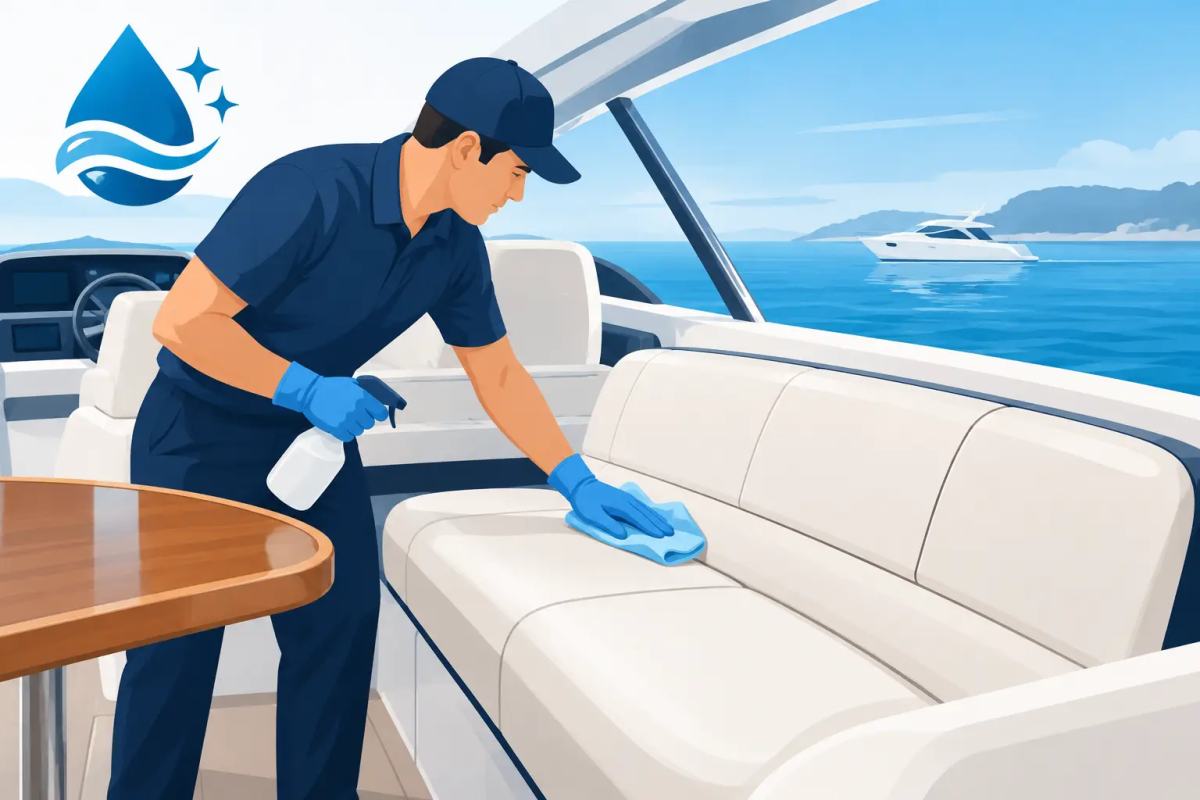
A boat cabin can look tidy on Friday afternoon and feel stale, sandy and damp by Sunday. Marine cleaning deals with the problems that ordinary household cleaning often leaves behind: salt carried in on shoes and spray, sunscreen residue, fish odours, wet towels, food spills and moisture trapped in enclosed spaces.
For vessel owners, the aim is not simply to make the interior look presentable. It is to protect upholstery, carpet, fabric linings and leather from premature wear while keeping the cabin more comfortable for family, guests or charter customers. The right method depends on the material, the level of soiling and how much drying time is available before the boat goes back out.
Why boat interiors need specialist attention
Marine interiors work harder than most living rooms. They are exposed to humid air, salt crystals, sand, damp clothing and frequent temperature changes. In a compact cabin, odours also linger longer because there is less airflow and soft furnishings readily absorb moisture.
Salt is particularly tough on fabrics and fittings. Left in carpet or upholstery, it can leave surfaces feeling stiff, attract further dirt and contribute to fading and wear. Sand creates another issue. It works deep into carpet pile and seat seams, where basic vacuuming may remove the loose grit but not the fine particles grinding away beneath the surface.
Then there are the usual spills: coffee on a cream lounge, sunscreen on vinyl, bait or food residue in the cabin, and muddy marks after a day ashore. Acting quickly helps, but rubbing a stain or soaking a cushion with the wrong cleaner can spread the problem or leave water marks behind.
What professional marine cleaning can treat
A proper marine clean is tailored to the areas people touch, sit on and walk across. It can include carpeted cabins, upholstered seating, lounges, fabric wall linings, mattresses, rugs, leather trim and removable cushions. Each surface needs its own approach.
Carpet and fabric upholstery generally benefit from deep extraction that lifts embedded soil, salt residue and stale odours from below the visible surface. Commercial-grade equipment removes the cleaning solution and suspended grime efficiently, rather than leaving the material saturated. This is a major advantage on boats, where lingering dampness is never welcome.
Leather needs a gentler process. Strong alkaline products, harsh brushes and excessive moisture can strip its finish, dry it out or cause cracking. Marine leather care should focus on safe cleaning, controlled moisture and conditioning appropriate to the finish.
Vinyl and synthetic marine fabrics can be durable, but they are not indestructible. Sunscreen, body oils and mildew marks may need targeted treatment, while aggressive chemicals can dull the surface or affect stitching. A technician should identify the material before choosing products and pressure levels.
Odour treatment is also more than covering the smell with fragrance. The source needs to be addressed. If odour-causing residue remains in carpet backing, foam cushions or a damp underlay, it will return once the cabin is closed up again. Effective treatment combines cleaning with appropriate deodorising and, where needed, sanitisation.
Marine cleaning methods that suit the material
The best cleaning method is not always the wettest or strongest one. In fact, using too much water inside a vessel can create a new issue, especially where ventilation is limited or furnishings are fixed in place.
For heavily soiled carpet and upholstery, hot water extraction can be highly effective when carried out with controlled application and strong recovery. It flushes contaminants from the fibres while recovering moisture quickly. Fast drying matters because it helps reduce the conditions that encourage musty smells and mildew.
Low-moisture cleaning may be the better option for delicate fabrics, lightly soiled areas or cabins that need to be used again soon. It is also useful where access is tight and water use must be carefully managed. The trade-off is that a low-moisture process may not be enough on its own for deep contamination, pet-type odours or old spills that have reached the backing or cushion foam.
Spot treatment should always come before general cleaning when there are visible stains. A red drink spill, oily sunscreen mark and fish residue do not respond to the same product. Treating them as though they do can set the stain, damage the fabric or leave a ring around the affected area.
The places owners often miss
The obvious carpeted floor and main seating are a good place to start, but they are rarely the only areas holding soil and odour. Seat bases, mattress edges, narrow carpet strips beside bunks and the space beneath removable cushions often collect more grime than expected.
Fabric linings and curtains can also hold airborne salt, cooking odours and moisture. They may not look dirty, yet can make a cabin feel less fresh. Similarly, leather or vinyl bolsters can build up body oils and sunscreen where people rest their arms and shoulders.
Pay attention to any area affected by a leak, wet storage compartment or a spill that was covered rather than cleaned. If carpet or foam has stayed wet for an extended period, surface cleaning alone may not be sufficient. The underlying material may need inspection, drying and more intensive treatment to prevent ongoing odour or mould concerns.
When DIY cleaning creates more work
A quick wipe-down between trips is worthwhile. Vacuuming sand, blotting spills immediately and airing out the cabin all help keep the interior in better condition. The trouble starts when strong supermarket chemicals, too much water or unsuitable stain removers are used on valuable marine furnishings.
Over-wetting a cushion can push moisture into the foam, where it takes far longer to dry. Scrubbing can roughen delicate fabric, spread an oily stain or damage protective coatings on leather and vinyl. Bleach-based products may appear to improve a mark initially but can weaken fibres, fade colour and leave a sharp chemical smell in a small cabin.
There is also a difference between surface freshness and a genuinely clean result. If the carpet looks better but still feels gritty, or the cabin smells fine until the doors are shut for a few hours, the embedded contamination has probably not been fully removed.
Choosing a cleaner for your vessel
Ask whether the cleaner has experience with different upholstery, leather and fabric types, not just domestic carpet cleaning. Boat interiors have awkward access, limited drainage and materials that can be expensive to replace. The job needs suitable equipment, careful moisture control and products selected for the specific surface.
It is worth discussing access before the appointment. Marina parking, berth access, onboard power, water availability and the location of the vessel can affect how the work is planned. A professional team should be clear about what can be cleaned in place, what may need to be removed and how long treated areas are likely to take to dry.
For Northern Beaches boat owners, Pro Wet & Dry can assess carpets, upholstery, leather and fabric furnishings with a material-specific approach. The goal is straightforward: remove the dirt, stains and odours that make a cabin unpleasant, without creating unnecessary moisture or risking the finish.
A practical maintenance schedule
How often a boat needs professional cleaning depends on use. A lightly used cruiser that is well ventilated may only need a detailed interior clean annually. A family boat used most weekends, a fishing vessel or a charter boat can benefit from more regular attention, especially after a busy season.
Between professional cleans, vacuum carpets and upholstery regularly, wipe down vinyl and leather with suitable products, deal with spills promptly and leave hatches or doors open for ventilation when it is safe to do so. Avoid storing wet towels, life jackets or gear in enclosed compartments.
If the cabin has started to smell musty, the carpet feels gritty, or a stain has survived your best efforts, do not wait for it to become part of the boat. Early marine cleaning is usually simpler, faster and more cost-effective than trying to restore a heavily soiled interior later.
Marine Upholstery
Need a hand with this?
Boat carpets, cushions, vinyl and cabin upholstery cleaned and freshened up. Pro Wet & Dry has been cleaning on the Northern Beaches since 2001.
Or call 1300 132 273