Tips & guides
Split System Cleaning for Fresher Indoor Air
Split system cleaning removes built-up dust, mould and odours, helping Northern Beaches homes and businesses enjoy cleaner air and efficient cooling now.
That stale smell when the air conditioner starts, dark marks around the vents or a unit that no longer seems to cool properly are not problems to ignore. Split system cleaning removes the dust, moisture-related growth and residue that can build up inside the indoor unit, where a quick wipe of the cover cannot reach.
For homes, rentals, offices and hospitality spaces, a properly cleaned split system can make the room feel fresher and help the unit operate as it should. The right approach depends on the system’s condition, how often it runs and what has collected inside it. A lightly dusty filter needs different treatment from a blower wheel coated in grime or a drain tray affected by mould.
What builds up inside a split system?
A wall-mounted split system draws room air through filters and across the evaporator coil before sending cooled or heated air back into the room. Along the way, it also draws in ordinary household and workplace contaminants: dust, pet hair, lint, pollen, cooking residue and fine airborne particles.
The indoor unit is also exposed to condensation while cooling. When moisture meets dust in a dark, enclosed space, it creates a surface where mould and bacteria can develop. This is why an air conditioner may look clean from the outside but release a musty odour when switched on.
The main problem areas are usually the filters, evaporator coil, blower wheel, drain pan and condensate drain. Each plays a part in airflow and moisture management. If any of them is heavily soiled, the system can distribute unpleasant smells and particles through the room instead of delivering clean, comfortable air.
Signs your system needs professional attention
A clean filter is a good start, but it does not tell the whole story. The internal components sit behind covers and louvers, and a build-up on the blower wheel or coil may only become obvious once performance changes.
Look out for a persistent musty or sour smell, visible spotting around the outlet, weak airflow, drips from the indoor unit or increased dust blowing into the room. A system that takes longer to cool, runs noisily or needs to work harder than usual is also worth checking. These signs do not always mean there is a major mechanical fault, but they do mean the unit should be assessed rather than simply sprayed with fragrance or surface cleaner.
In busy spaces, the effects show up faster. Pet-owning households, coastal homes left closed up for periods, cafés, offices and properties with frequent guest turnover can all place more demand on their air conditioning. Regular cleaning is practical maintenance, not just a response to an obvious smell.
What proper split system cleaning involves
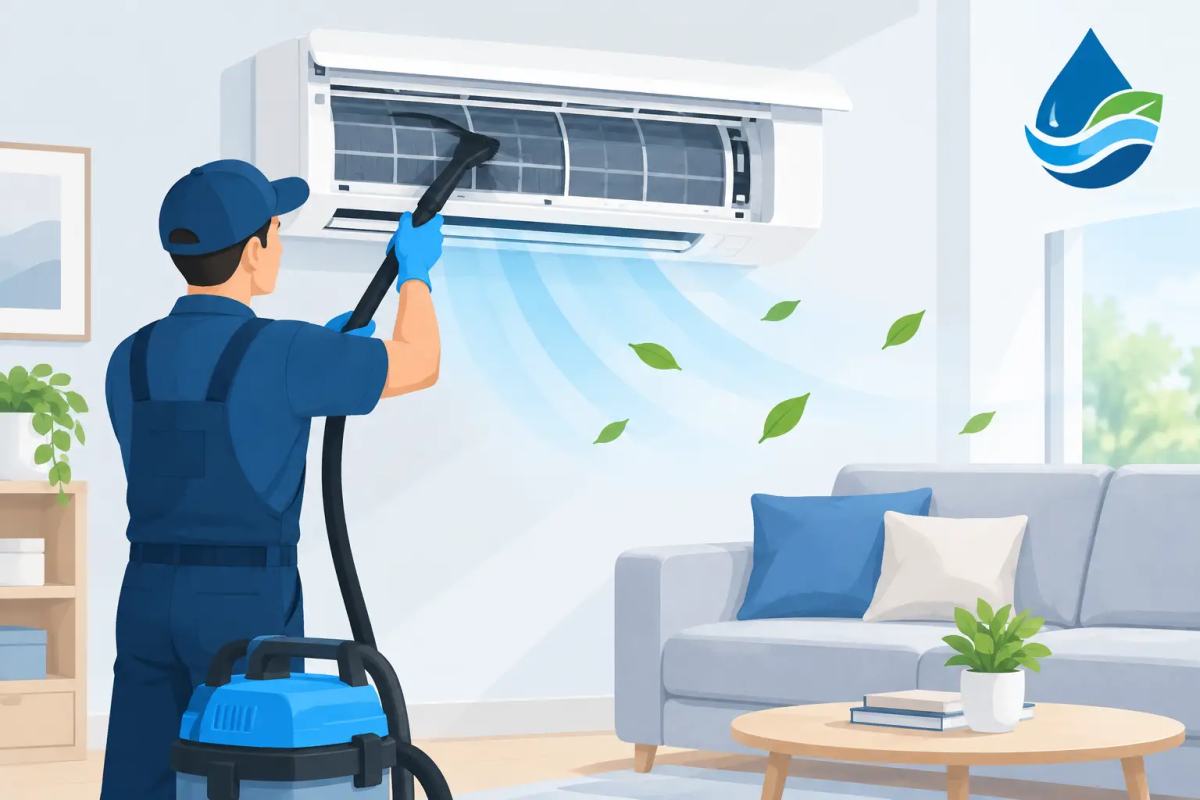
Professional split system cleaning is about accessing and treating the parts that affect airflow, hygiene and drainage, while protecting the room underneath. The unit is inspected first to identify visible contamination, drainage issues and the level of cleaning required.
Filters are removed and cleaned, while the coil and fins are treated with suitable products to lift built-up residue without damaging delicate components. The blower wheel requires particular care because dirt trapped on its blades can restrict airflow and create ongoing odours. A technician may use specialised equipment and collection bags to contain rinse water and grime during the process, rather than allowing dirty water to run down the wall, onto flooring or furnishings.
The drain pan and drain line also need attention. Condensation must be able to leave the unit cleanly. If the drainage path is dirty or partly blocked, water can back up and lead to leaks, staining or moisture damage around the indoor head.
Finally, the unit is reassembled and checked. The aim is not merely to make it look better at the front grille. It is to remove the material affecting the internal air path, improve the condition of the components and leave the room clean and usable straight away.
Why a spray-and-wipe clean falls short
Off-the-shelf air conditioner sprays can be useful for light upkeep when used exactly as directed, but they have limits. They may freshen accessible areas temporarily without removing the compacted dust and residue deeper in the unit. Heavy product use can also leave its own residue if it is not rinsed and managed properly.
Similarly, vacuuming the filters is worthwhile between services, yet it cannot clean the coil, drain pan or blower wheel. If the system has a recurring smell, visible mould, water leaks or poor airflow, a deeper clean is usually the more sensible option.
How often should split systems be cleaned?
For many households, annual professional cleaning is a sensible baseline, especially before a high-use summer period. Filters should be checked more often - commonly every few months - and cleaned according to the manufacturer’s instructions.
However, there is no one schedule that suits every property. A split system in a spare room used occasionally may need less attention than one operating every day in a family living area. Homes with pets, smokers, allergy concerns or high humidity may benefit from more frequent cleaning. Commercial sites and holiday rentals may also require a planned maintenance cycle to keep rooms presentable and avoid disruptions during busy periods.
If the unit produces an odour or begins leaking, do not wait for the next scheduled clean. Prompt attention can prevent a small drainage or hygiene issue from becoming a mess on walls, carpet, upholstery or timber flooring.
The benefits you can notice after cleaning
The most immediate difference is often the smell of the room. Removing the source of mustiness from the internal unit is more effective than masking it with air freshener. Cleaner filters and internal surfaces can also support stronger, more even airflow.
There can be an efficiency benefit as well. When filters, coils and blower components are congested with dust, the system has to push air through a restricted path. Cleaning does not fix worn parts, refrigerant faults or electrical issues, but it removes avoidable build-up that can make a working unit labour harder than it needs to.
For landlords and property managers, air conditioner hygiene is also part of preparing a property between tenancies. It helps present the home properly, addresses common tenant complaints about odours and reduces the risk of a dirty unit leaking onto interior finishes. For workplaces and marine environments, cleaner climate control supports a more comfortable space for staff, customers and guests.
Protecting the room during air conditioner cleaning
A quality result is not only about the split system itself. Indoor cleaning must be carried out with care around painted walls, electronics, furniture and floor coverings. This matters particularly where the indoor head sits above a lounge, bed, desk or valuable fabric furnishing.
Protective covers and controlled water recovery help keep contamination contained. The products used should suit the task and be applied carefully, rather than relying on harsh chemicals that can affect nearby materials or leave strong lingering fumes. If water has already leaked from an air conditioner, the surrounding surface may need separate treatment to prevent staining, odours or moisture from remaining beneath carpet or upholstery.
This is where a cleaning team with experience across soft furnishings, carpets and water recovery can be especially useful. Pro Wet & Dry can assess the affected area as well as the unit, so the visible leak and the material underneath it are not treated as separate problems.
Simple maintenance between professional cleans
There are a few straightforward habits that help keep a split system in better condition. Check and clean the filters as recommended by the manufacturer, keep the outdoor unit clear of leaves and stored items, and avoid running the system with doors and windows open for long periods. After cooling, using a fan or dry mode where available can help reduce moisture left inside the indoor unit.
Do not poke objects into the outlet, bend the coil fins or pour chemicals into the drain. If you see active dripping, hear unusual noises or suspect an electrical or refrigerant issue, switch the unit off and arrange qualified assessment. Cleaning and mechanical repairs are related, but they are not the same job.
A split system should make your home or workplace more comfortable, not leave the room smelling damp or feeling dusty. When the first warm day arrives, a clean, well-maintained unit is one less thing to worry about.
Carpet Cleaning
Need a hand with this?
Steam (hot water extraction) and dry carpet cleaning for homes, rentals and businesses, with fast drying times. Pro Wet & Dry has been cleaning on the Northern Beaches since 2001.
Or call 1300 132 273